Freezer meals graded by how well they actually reheat
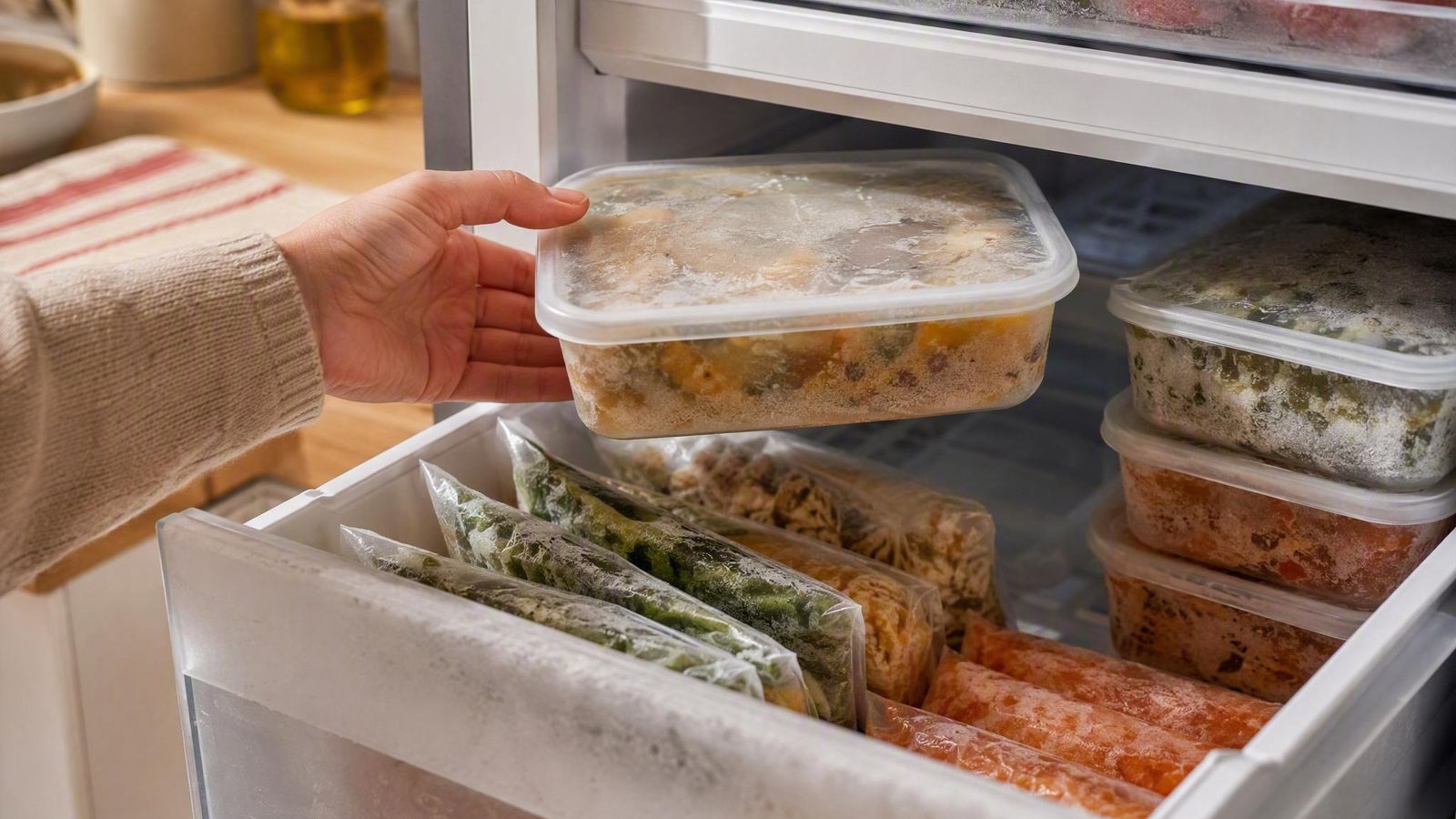
The freezer question is not what you can freeze, it is what comes back worth eating. Brothy, saucy, bean-heavy food reheats almost unchanged; fried, creamy, and watery food does not. Below is a freeze-quality grading of the usual suspects, the federal storage windows without wishful thinking, and a label-and-rotate system so nothing gets lost in the back.
What freezes well and what turns mushy
| Food | Freeze quality | Why |
|---|---|---|
| Brothy soups and stews | Excellent | Liquid protects texture; flavors deepen after freezing |
| Chili and bean dishes | Excellent | Beans and braised meat are nearly indestructible in the freezer |
| Burritos and breakfast burritos | Excellent | Tortilla shields the filling; individually wrapped portions reheat evenly |
| Meatballs and marinara | Excellent | Sauce keeps the meat moist through reheating |
| Baked pasta casseroles | Good | Slightly softer pasta after reheating, still satisfying |
| Cooked rice and grains | Good | Freeze flat in portions; texture recovers with a splash of water |
| Breaded and fried foods | Poor | Coatings go soggy; crispness does not survive the round trip |
| Cream and dairy-based sauces | Poor | Dairy tends to separate and turn grainy after thawing |
| Raw high-water vegetables (lettuce, cucumber, tomato) | Poor | Ice crystals collapse the cell walls into mush |
| Hard-boiled eggs and mayo-based salads | Poor | Whites turn rubbery and dressings split |
The pattern: sauce and moisture are armor, crispness and raw crunch are casualties. Build your freezer list from the top of the table and add fresh elements (greens, crunchy toppings, dairy finishes) on serving day instead of freezing them.
A starting lineup that earns its freezer space
- Black bean burritos. Beans, rice, and cheese wrapped tight in foil, frozen flat in a single layer, then bagged. Each one is a grab-and-go lunch; add salsa fresh, never frozen. Contains wheat and milk.
- Weeknight chili. Freeze in flat bags so it thaws fast and stacks like books. Chili is the most forgiving freezer meal there is, and it doubles as a thermos filling for packed lunches.
- Chicken and vegetable soup. Slightly undercook the vegetables before freezing so reheating finishes them instead of dissolving them. Portion into single-meal containers, not one giant tub.
- Meatballs in marinara. Freeze in meal-size portions with plenty of sauce. They go over pasta, into rolls, or beside rice, so one batch covers three different dinners. Contains egg and wheat in most recipes.
- Baked ziti portions. Assemble, portion into oven-safe containers, and freeze before or after baking. Expect a softer noodle and plan a fresh salad alongside. Contains wheat and milk.
- Breakfast burritos. Scrambled eggs, potatoes, and cheese, individually wrapped. The reason they beat drive-through mornings is that the portion decision was made weeks ago. Contains egg, milk, and wheat.
Honest storage windows
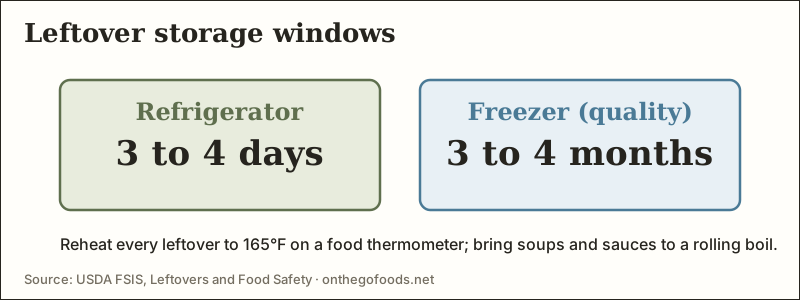
These are the federal numbers. Note that the freezer windows are about quality, not danger.
Label and rotate
Every container gets three things in marker on tape: the dish, the freeze date, and a reheat note (from frozen, or thaw first). Then rotate: newest to the back, oldest to the front, and eat from the front. A freezer without dates becomes an archive of mystery bricks, and the quality windows above are useless if you cannot tell how old anything is. Keep a running list on the freezer door so you shop your own freezer before the store; that habit is also the backbone of budget meal prep.
Thaw and reheat safely
Plan thawing ahead: move tomorrow's meal from freezer to refrigerator and let it thaw there, in the refrigerator, not on the counter. Flat-frozen bags thaw noticeably faster than deep tubs, which is another argument for freezing flat. Soups, stews, and chili can also go straight from frozen into a pot over low heat with a splash of water.
Freezer-day checklist
Freezer-day checklist
- Pick recipes from the Excellent and Good rows only
- Cool food fully before it goes into bags or containers
- Freeze flat in single-meal portions, not one giant tub
- Tape on every container: dish, freeze date, reheat note
- Rotate: oldest portions to the front of the shelf
- Update the door inventory list before you close the freezer
Freezer meals shine hardest as packed lunches: a frozen burrito or chili portion leaves home solid and rides to work while it thaws. Pair this page with the meal prep hub and our food safety guides for the full system.
Sources
- USDA FSIS: Leftovers and Food Safety · www.fsis.usda.gov (accessed 2026-08-31)
- FoodSafety.gov: Cold Food Storage Chart · www.foodsafety.gov (accessed 2026-08-31)
- USDA FSIS: Freezing and Food Safety · www.fsis.usda.gov (accessed 2026-08-31)