Work lunches you can pack tonight
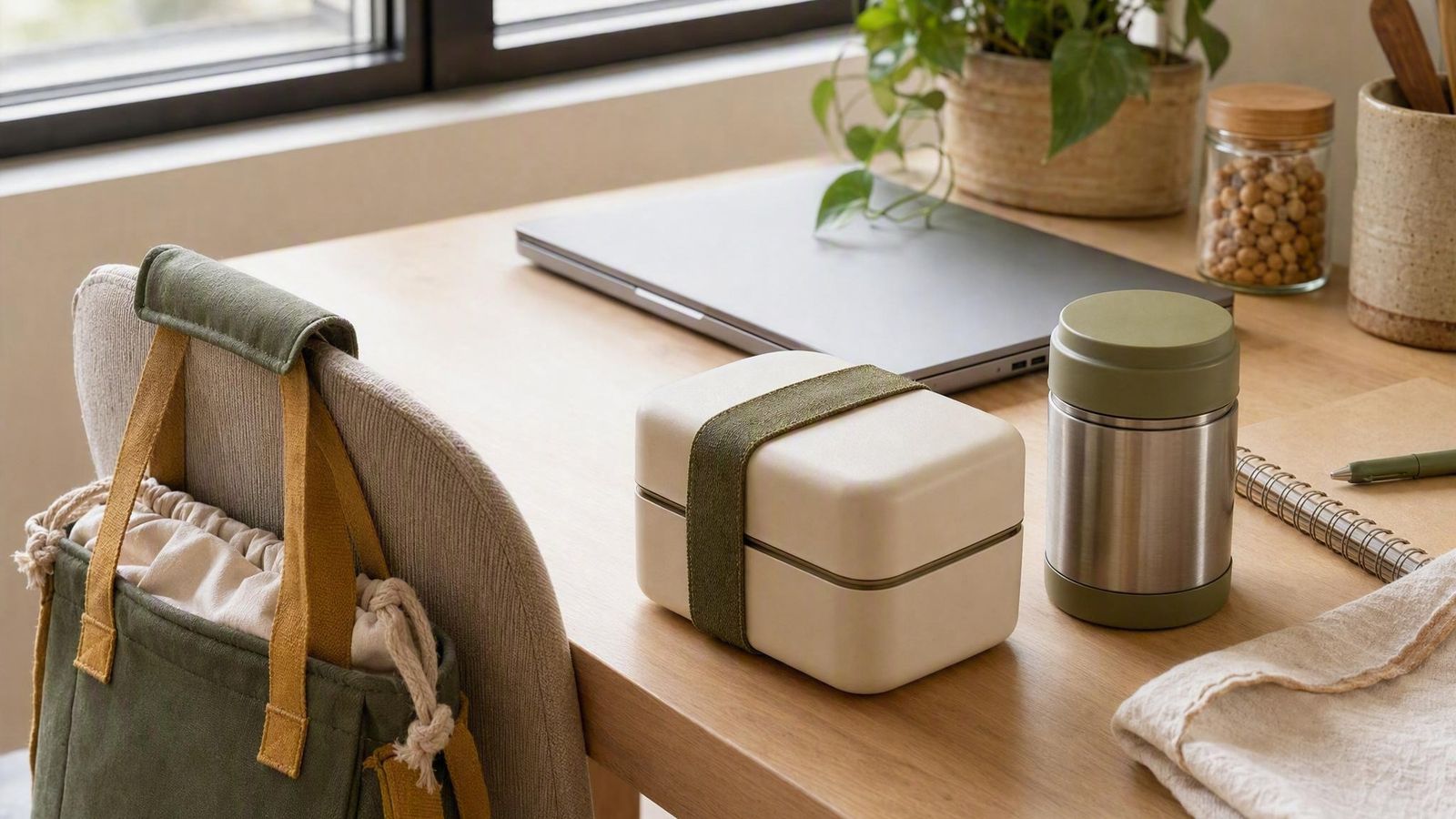
The fastest way to a work lunch you will actually eat is to pick by constraint, not by recipe. Figure out what your workplace gives you, a fridge, a microwave, neither, or a long commute in between, and choose a lunch style built for that situation. Every guide in this hub starts from one of those constraints, so you can skip the ideas that were never going to work at your desk.
In this hub
No-microwave lunch ideas that still feel like a meal
Bento box lunch for adults: the 5-slot build formula
Start with your constraint, not a recipe
Most work lunch lists assume you have a full kitchen at the office. Most people do not. Before you save another recipe, answer three questions: is there a refrigerator you can reach, is there a microwave you would actually wait in line for, and how long does your food ride in a bag before you eat it?
If cold storage is the problem, head to cold lunch ideas for meals designed to ride in an insulated bag, or to meals that don't need refrigeration for food that holds at room temperature by nature. If reheating is the problem, no-microwave lunch ideas covers room-temperature meals and the thermos route in detail. If your issue is time, not equipment, the make-ahead systems in meal prep ideas move the work to Sunday so weekday mornings are just grab and go.
The three constraints, compared
| Your constraint | Lunch style that works | Gear to buy once | Watch out for |
|---|---|---|---|
| No refrigerator at work | Room-temperature-stable meals: grain salads with vinaigrette, nut butter sandwiches, whole fruit, hard cheese and crackers | Insulated bag plus freezer gel packs for anything perishable | Perishable food cannot ride unprotected; see the safety rules below |
| No microwave | Meals that are good cool by design, or hot food carried in a preheated thermos | A vacuum-insulated food jar | Skip anything that only tastes right piping hot from a microwave, like melted-cheese dishes |
| Long or hot commute | Sturdy, fully chilled meals packed straight from the fridge | Hard-sided insulated box and frozen cold sources | Heat in a car multiplies the risk; keep the bag out of direct sun and the trunk |
| Fridge and microwave available | Almost anything, including true leftovers | Leak-proof containers that reheat evenly | Refrigerate your lunch when you arrive instead of leaving it at your desk |
Keep it safe between home and lunch
A packed lunch spends hours outside your kitchen, so the safety plan matters as much as the recipe. Two rules from USDA cover almost every situation an office worker meets.
For the full set of packed-lunch rules, including what to do with leftovers you did not finish, see packed lunch food safety. The broader time and temperature rules live in the food safety hub.
The pack-tonight checklist
Pack tonight, grab in the morning
- Pick one constraint above and one lunch style that matches it
- Portion the meal into the actual container it will travel in, not a serving bowl
- Put the gel packs in the freezer now if anything perishable is going; the USDA rule above says how many and what size
- Dress salads only if they hold; keep vinaigrette in a small jar otherwise
- Stage the insulated bag by the door with utensils and a napkin inside
- Add one backup snack that needs no cold at all, like whole fruit or nuts
Packing the night before is the single habit that keeps a lunch routine alive. The morning version of you only has to open the fridge, drop in the cold packs, and leave. Once the routine holds for a week, branch out through the guides below and build a rotation you do not have to think about.
Sources
- USDA FSIS: Keeping 'Bag' Lunches Safe · www.fsis.usda.gov (accessed 2026-08-31)