Bento box lunch for adults: the 5-slot build formula
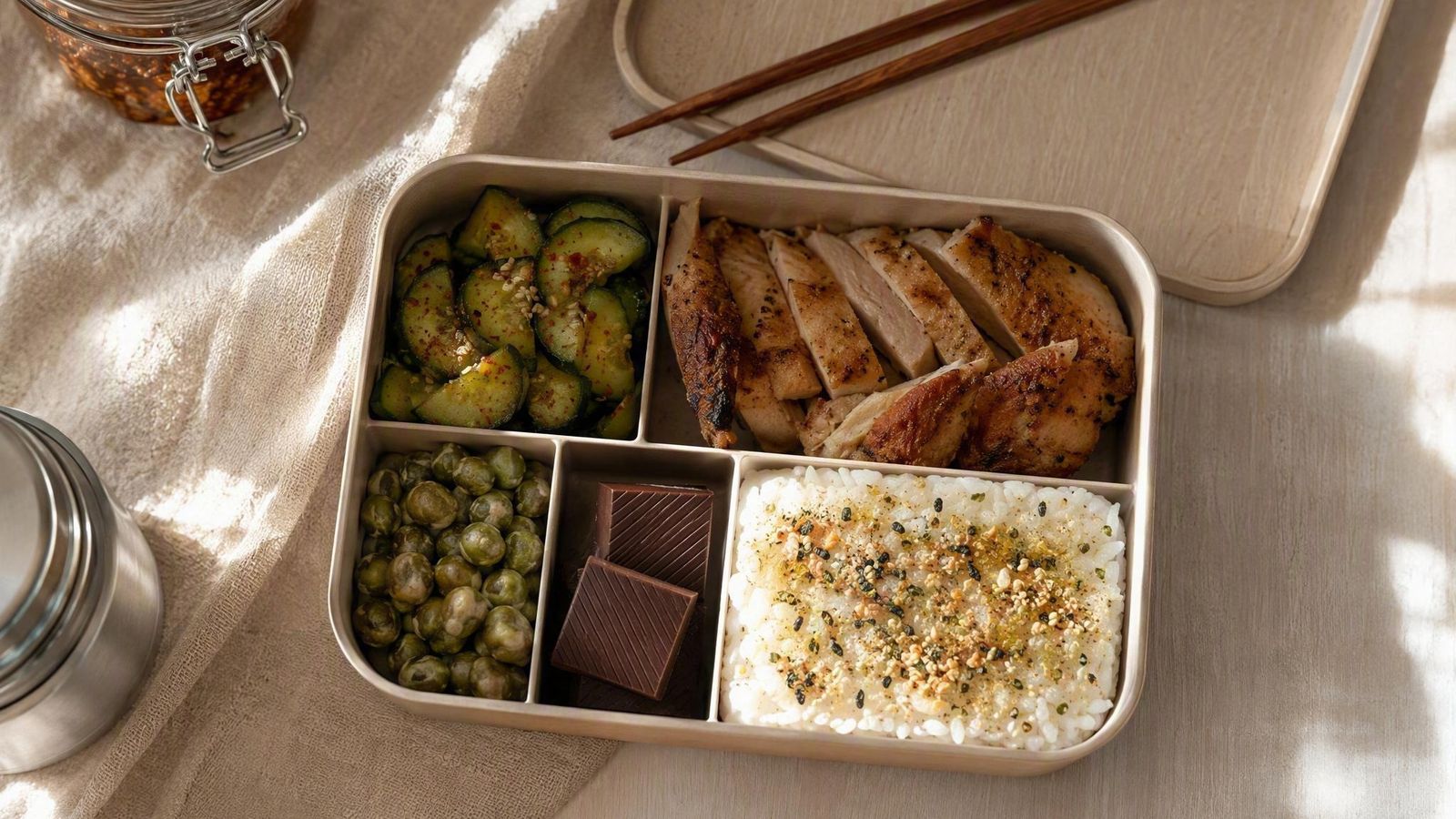
A bento box lunch for adults is not a photo contest, it is a formula: one main, two sides, one crunchy thing, one sweet thing. Fill those five slots from lists you already stock and the box builds itself in ten minutes the night before, no recipe required. This page is the build method: the slot lists, six grown-up flavor combinations that survive a commute, the packing order that keeps crisp things crisp, and the cold-chain setup that keeps the perishable slots safe. If you want ready-made menu families instead of a build system, that is our cold lunch ideas page; this one teaches the compartments.
The five-slot formula: 1 main + 2 sides + 1 crunch + 1 sweet
The formula works because it removes decisions, not options. You never stand at the fridge wondering what a bento is; you fill five slots, and the compartments of the box enforce the portions. Stock each slot's list once and the same groceries recombine all week without repeating a lunch.
- Main, roughly half the box: rotisserie or roasted chicken, hard boiled eggs riding whole in the shell, baked tofu, tuna or chickpea salad sealed in its own cup, last night's meatballs, or sliced leftover steak. The main is what makes the box a lunch instead of a snack plate.
- Side one, a vegetable: cucumber ribbons in rice vinegar, blistered cherry tomatoes, snap peas, marinated carrot sticks, or roasted broccoli eaten cold. Cooked-and-cooled vegetables travel better than delicate leaf salads.
- Side two, a starch: a rice block pressed compact while warm, soba or sesame noodles, small roasted potatoes, or a folded flatbread. The starch is the slot that keeps the afternoon from ending at the vending machine.
- Crunch: wasabi peas, roasted chickpeas, pretzel thins, seeded crackers, or pickled radish. Crunch is morale; a box without it eats like reheated leftovers gone cold.
- Sweet: two squares of dark chocolate, dried mango, a few dates, or frozen grapes, which thaw by noon and help chill the box on the way.
Six grown-up combos that travel
| Combo | Why it travels | Allergen note |
|---|---|---|
| Soy-ginger chicken, sesame cucumbers, rice block, wasabi peas, mandarin segments | Everything is meant to be eaten cold, and a pressed rice block holds its shape against jostling | Contains soy, wheat (soy sauce), sesame; check labels for cross-contact |
| Hard boiled eggs, marinated tomatoes, soba noodles, seaweed snacks, dark chocolate | Eggs ride whole in the shell and get peeled at the desk, so nothing weeps into the noodles | Contains egg and wheat (most soba); some soba is made without wheat, check labels |
| Tuna salad cup, snap peas, seeded crackers, pickled radish, dried mango | The sealed cup keeps the tuna to itself; crackers stay dry in their own compartment | Contains fish and egg (mayo); crackers may contain wheat and sesame |
| Baked tofu, cold roasted broccoli, sesame noodles, roasted chickpeas, dates | Made without meat, egg, and dairy, and every item is sturdy at cool-bag temperature | Contains soy, sesame, wheat; check labels for cross-contact |
| Sliced steak, blistered peppers, small potatoes, pretzel thins, frozen grapes | Cold steak beats reheated gray steak, and potatoes keep their texture | Contains wheat (pretzels); made without nuts, check labels for cross-contact |
| Chickpea salad cup, carrot sticks, folded flatbread, olives, two chocolate squares | Nothing here wilts; the flatbread wraps the salad at lunch, not hours before | Contains wheat; chocolate labels often warn of milk, soy, and nut cross-contact |
Packing order: wet things contained, dry things last
Bento boxes fail in transit, not in the fridge, and they fail wet-to-dry. The fix is order and containment. Anything wet or dressed, tuna salad, marinated vegetables, olives, goes into silicone cups or sealed mini containers inside the box, so juices cannot migrate. Dressings and sauces always ride in their own leakproof cup; the box gets dressed at the desk, never the night before. Then pack in this order: the main into the largest compartment first, the starch pressed snug beside it, vegetables in their cups, the crunch slot last so it never sits against moisture, and the sweet tucked into the smallest corner. A snug box travels better than a roomy one, because food that cannot slide cannot smear. Before the lid closes, check the gasket; a bento that no longer seals is a tote bag incident waiting to happen.
The cold chain that makes a perishable box safe
Most of the slot lists above include perishable items, so the box needs the same setup USDA prescribes for any packed lunch.
Build the box the night before and refrigerate it overnight, so it starts the commute already cold and the gel packs only have to maintain temperature, not create it. The full time-and-temperature picture, including offices with no fridge at all, is in how long is a packed lunch safe.
Build tonight, grab tomorrow
- Pick one item per slot: main, two sides, crunch, sweet
- Portion wet items into silicone cups or sealed mini containers
- Press the starch compact while slightly warm, then cool it fully before the lid goes on
- Put dressing in its own leakproof cup; dress at the desk
- Refrigerate the finished box overnight
- Freeze both gel packs and stage the insulated bag by the door
How this page differs from cold lunch ideas
Our cold lunch ideas page is organized by meal family: full menus you can copy. This page is the compartment method: a system that turns whatever the fridge holds into a box. Use that page when you want a menu, this one when you want the formula. A bento also never needs reheating, which makes it a natural answer for offices covered in our no-microwave lunch guide; the rest of the desk-lunch playbook lives in the work lunches hub.
Sources
- USDA FSIS: Keeping 'Bag' Lunches Safe · www.fsis.usda.gov (accessed 2026-08-31)