How long is a packed lunch safe?
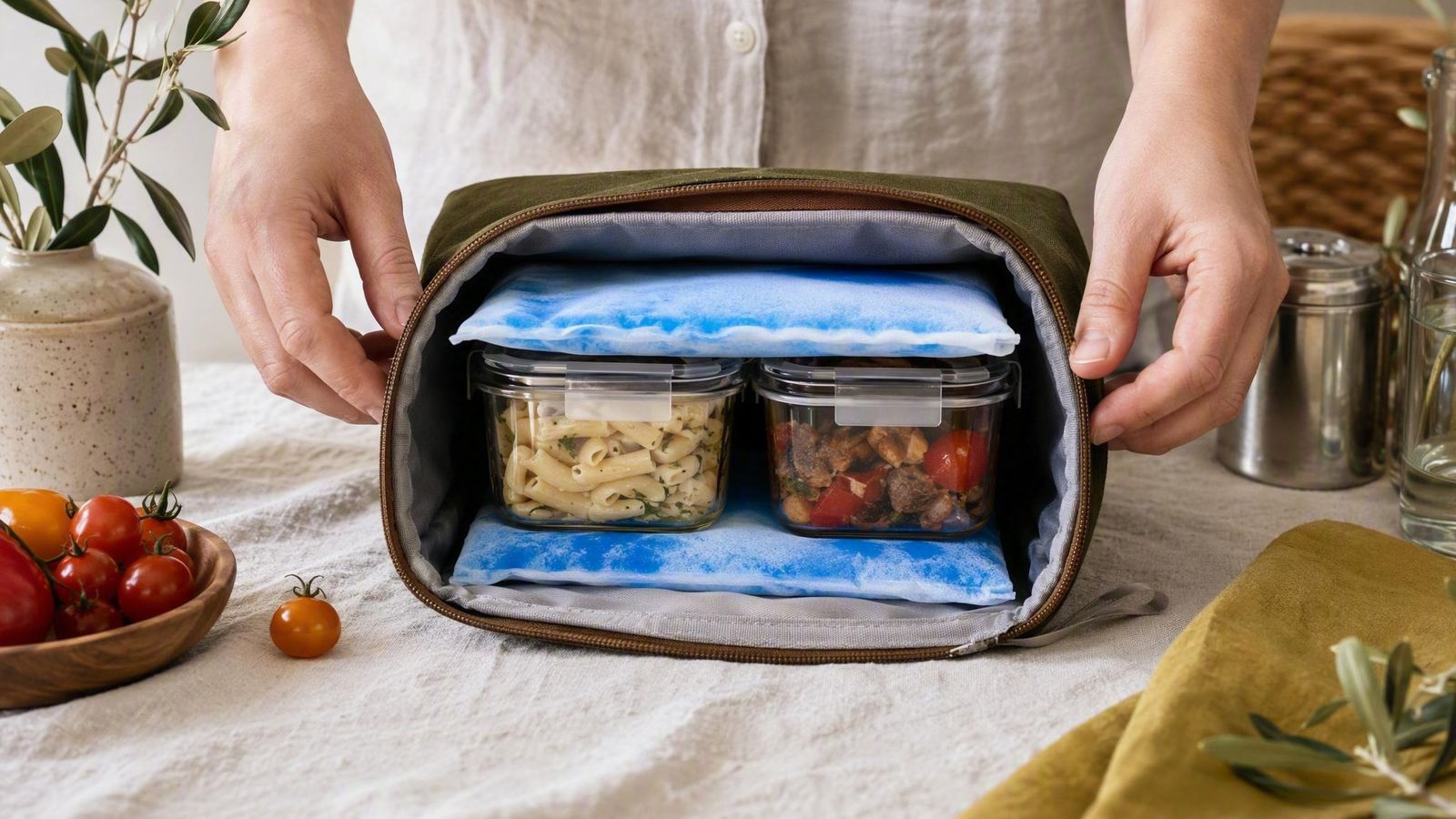
A packed lunch with perishable food is safe from morning to lunchtime if, and only if, it travels with real cold sources, goes into a fridge on arrival, or rides steaming hot in a properly preheated thermos. In a plain bag with nothing keeping it cold, it runs out the USDA room-temperature clock before noon. Most pages about lunchbox ice packs are selling one; this page answers the safety question with USDA's own setup.
The clock every lunchbox is racing
Home-to-lunch is longer than that window for almost everyone, so USDA's bag-lunch guidance is about keeping food cold or hot so the clock never applies. The temperature band behind it is explained in our Danger Zone guide.
The cold lunch setup, exactly as USDA describes it
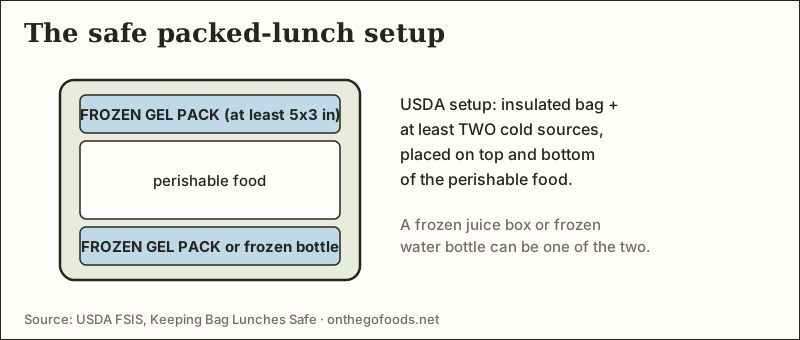
The details carry the safety. An insulated bag, not a paper sack. Cold sources in the plural, placed above and below so cold surrounds the perishables instead of sitting beside them. A frozen water bottle or juice box doubles as a cold drink by noon. Pack the food straight from the fridge, never warm. Menus built for this cold chain live in cold lunch ideas.
The hot lunch setup: thermos done right
The preheat is the step people skip and the step that makes it work: a cold thermos steals heat from the food the moment it goes in. Boiling water first, then the food at its hottest, then the lid stays shut until eating. Meal ideas for this route are in thermos meals; if your workplace has no microwave, this is your hot option, see no-microwave lunches.
No fridge at work or school
No fridge at all? The insulated bag with both cold sources is the fallback, kept out of the sun and away from heat. In hot weather, remember the shorter window in the clock rule above. If your workday routinely offers no fridge, build lunches that do not need one; that is the point of our no-fridge lunch ideas and the wider no-refrigeration hub.
The after-lunch rule
By lunchtime the cold sources are fading, so a half sandwich riding home spends the afternoon in the growth band. Portion smaller instead. Shelf-stable extras like crackers, whole fruit or nuts can ride home; the perishables do not.
What-if scenarios
| Scenario | How the rule applies | The call |
|---|---|---|
| Insulated bag, both cold sources, eaten at lunch | Food stays cold, clock never bites | The standard safe setup |
| Paper bag, no cold source, morning on a desk | Clock runs the whole morning | Refrigerate on arrival, or repack properly tomorrow |
| Thermos soup, but the thermos was not preheated | Food may not hold on the hot side | Preheat next time; when unsure at lunch, discard |
| Lunchbox forgotten in the car until evening | Far past the window, cold sources dead | Discard the perishables |
Parent quick-reference checklist
The night-before and morning-of routine
- Night before: gel packs (or the backup frozen water bottle) into the freezer
- Night before: portion lunch into containers and refrigerate
- Morning: food goes straight from fridge to insulated bag, never warm
- Morning: cold sources above and below the perishables, per the USDA rule above
- Hot route: boiling water preheat, empty, piping-hot food in, lid shut until lunch
- Tell kids: bag stays out of the sun, thermos stays closed, uneaten perishables get tossed
Common questions
Is one ice pack enough? USDA's published setup calls for more than that, with placement on both sides of the food, as quoted above.
How long do ice packs actually keep food cold? USDA does not publish a melt-time figure, and pack marketing claims are not safety data. Follow the setup as described and refrigerate on arrival when you can.
Can a lunch packed the night before be safe? Yes, if it stays refrigerated overnight and goes into the insulated bag with its cold sources in the morning.
Does a frozen juice box really count? Yes; USDA's own guidance names a frozen juice box or frozen water bottle as one of the cold sources, as part of the full setup rather than instead of it.
Sources
- USDA FSIS: Keeping 'Bag' Lunches Safe · www.fsis.usda.gov (accessed 2026-08-31)