Non refrigerated lunch ideas, with the safety status of every item
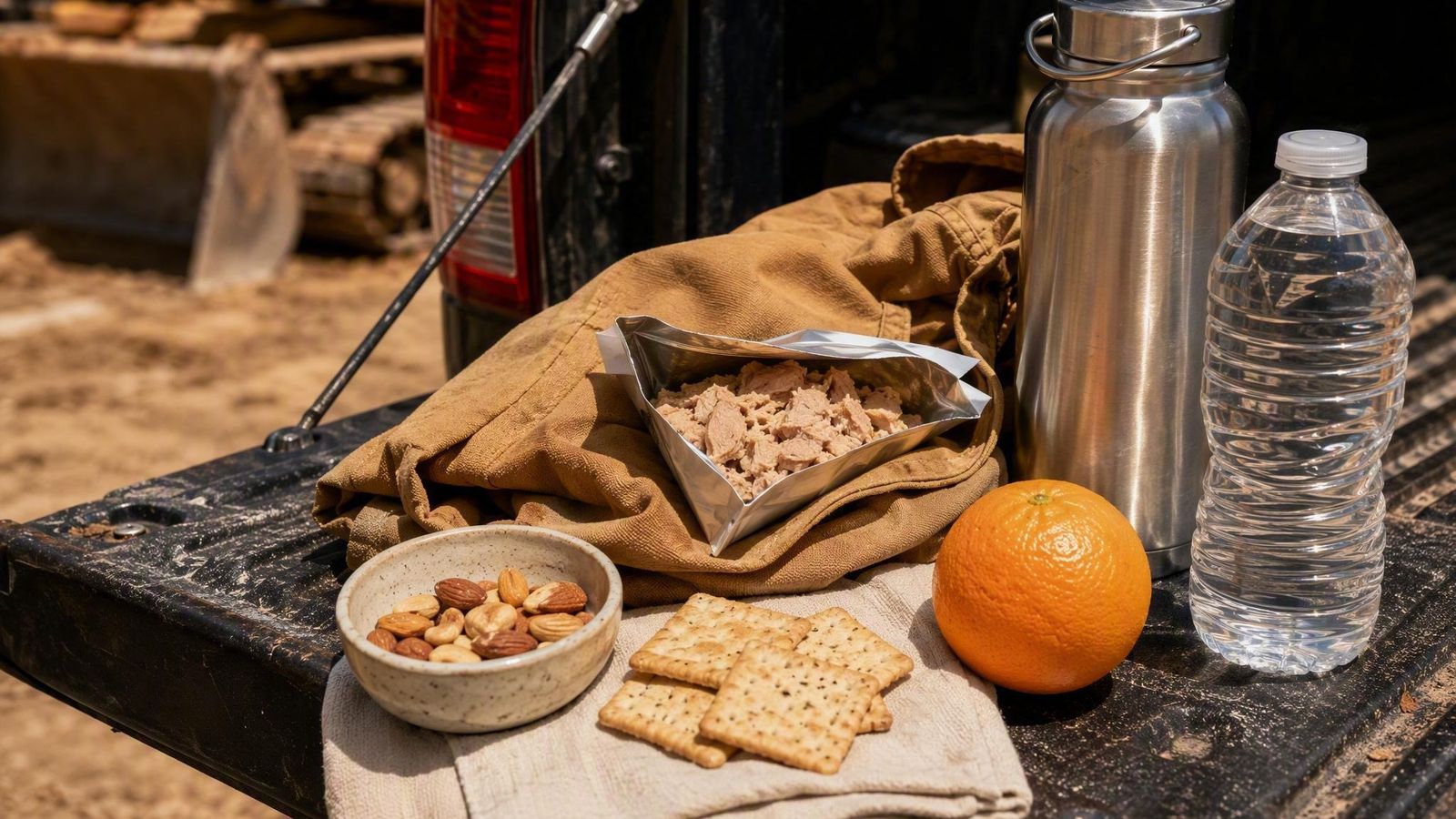
This page assumes you have no cold at all: no fridge at work, no ice pack, no cooler. That is a different problem from a missing microwave, and it splits food into two honest categories. Truly shelf-stable items are fine all day. Everything else is on the federal clock from the moment it leaves your kitchen. Every idea below is labeled one way or the other.
First, the honest safety picture
So a no-fridge lunch is either built from foods that were never perishable in the first place, or it is a perishable lunch you commit to eating early, inside the window above. Most lists online ignore this split. We do not. If you can carry even one frozen water bottle, your options widen a lot; that version lives in our no-microwave guide, which assumes some cold may exist.
Safe-window table: shelf-stable vs eat-soon
| Item | Status | What that means |
|---|---|---|
| Unopened tuna, chicken, or salmon pouches and cans | Shelf-stable | Fine all day; the clock starts when you open them |
| Nut and seed butters, crackers, sturdy bread | Shelf-stable | Fine all day, no cold needed |
| Whole fruit, dried fruit, nuts, jerky | Shelf-stable | Fine all day, no cold needed |
| Single-serve shelf-stable hummus or bean dips, unopened | Shelf-stable | Check the label says no refrigeration before opening |
| Cooked grains, beans, pasta, eggs, cheese | Perishable | Eat within the USDA window above, then discard |
| Cut fruit and vegetables | Perishable | Eat within the USDA window above, then discard |
| Sandwiches with meat, cheese, or egg fillings | Perishable | Eat within the USDA window above, then discard |
Lunches that need no fridge
- Nut butter sandwich on sturdy bread. Shelf-stable. Peanut or almond butter with banana or honey on a dense bread that will not crush in a bag. Assemble in the morning; nothing in it needs cold. Contains peanut or tree nuts and wheat; sunflower seed butter works for worksites that restrict nut products; check the label for cross-contact.
- Tuna pouch and crackers kit. Shelf-stable until opened. An unopened pouch, crackers, olives in a sealed cup, and a whole apple. Open the pouch at lunch, eat it all, done. Travels well because nothing is assembled until you eat. Contains fish and wheat.
- Trail box: jerky, nuts, dried fruit. Shelf-stable. The classic fieldwork lunch, and the only one here that shrugs off a hot truck cab. Portion it into one container the night before so you are not rationing from big bags. Contains tree nuts or peanuts.
- Hummus cup and pretzel plate. Shelf-stable until opened. Single-serve shelf-stable hummus cups plus pretzels, carrots packed whole, and dried apricots. Verify the label says the cups need no refrigeration before opening. Contains sesame and wheat.
- Peanut butter tortilla roll-ups. Shelf-stable. Nut butter and a drizzle of honey rolled in a flour tortilla, sliced into pinwheels. Holds shape better than sandwich bread in a crowded bag. Contains peanut and wheat.
- Bean salad in vinaigrette. Perishable, eat early. Chickpeas or three-bean salad in an oil and vinegar dressing, no dairy, no mayo-family sauces. Make it the night before and refrigerate until you leave, then eat it inside the USDA window above.
- Hard cheese and fruit board. Perishable, eat early. A hunk of aged cheddar or parmesan, grapes, and crackers. Pack it cold from the fridge and make it your first break of the day, not your last. Contains milk and wheat.
- Roasted chickpea crunch box. Shelf-stable. Crisp roasted chickpeas, whole-grain crackers, and an orange. Vegan, made without nuts (check labels for cross-contact), and unbothered by heat, which makes it the safest default for shared jobsite coolers that do not exist. Contains wheat.
Jobsite and fieldwork packing
Construction sites, delivery routes, trail crews, and farm work share one enemy: a vehicle that turns into an oven. On hot days the shorter USDA window above applies, so treat every perishable item as a morning-only food or drop it entirely and go full shelf-stable. Pack water separately from food, keep the lunch bag out of direct sun and off the dashboard, and put the day's lunch in a hard container so it survives a toolbag.
No-fridge packing checklist
No-fridge packing checklist
- Build the lunch from the shelf-stable column first
- Any perishable item: plan to eat it at your first break
- Check dip and pouch labels for refrigeration wording before trusting them
- Pack portions you will finish; perishable leftovers get discarded, not saved
- Keep the bag shaded and away from engine heat or the dashboard
- Add a shelf-stable backup (bar, nuts, jerky) for the day plans fall apart
For the reasoning behind the time limits, see how long food can sit out and the danger zone explained. More no-cold strategies live in the no-refrigeration hub.
Sources
- USDA FSIS: Keeping 'Bag' Lunches Safe · www.fsis.usda.gov (accessed 2026-08-31)
- USDA FSIS: Danger Zone (40°F - 140°F) · www.fsis.usda.gov (accessed 2026-08-31)