Danger zone food temperature, explained for real lunches
The Danger Zone is the temperature band where bacteria in perishable food multiply fastest. Most explanations of it are written for restaurant workers with hot-holding cabinets and walk-in coolers. This page translates the same USDA rule for the situations you actually face: a lunchbox sitting on a desk, a grocery run on a hot day, and leftovers cooling on the counter. The short version: room temperature sits squarely inside the zone, so perishable food gets a limited clock there, and your job is to keep food out of that band or keep the clock short.
What the Danger Zone actually is
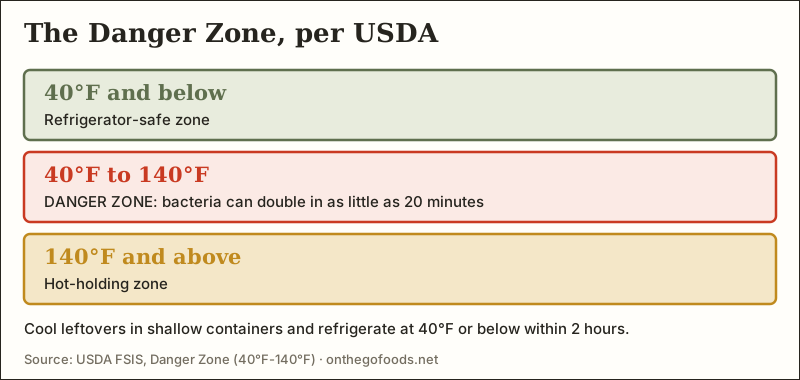
Notice what the definition does not say. It does not say food in the zone is instantly unsafe, and it does not say food outside the zone is safe forever. It says growth is fastest inside the band, which is why USDA pairs the zone with a time limit.
A lunchbox on a desk is inside the zone
An office, a classroom, and a car interior are all room temperature or warmer, which means a packed lunch with meat, cheese, cut fruit, yogurt, or cooked leftovers spends its wait inside the Danger Zone unless you pack cold sources or use a fridge. The clock starts when the food leaves your refrigerator at home, not when you arrive at work. Our packed lunch safety guide covers the exact USDA setup for keeping that clock from mattering, and our cold lunch ideas lean on foods that hold up well in a proper cold chain.
A cooler or grocery bag in the car
A parked car heats up fast, and the USDA rule above shortens the allowed window when the surrounding temperature climbs past its stated threshold. USDA does not publish a separate hours-per-cooler figure, so do not trust cooler marketing math. Treat the trip qualitatively: keep it short, keep perishables with ice sources, and put them in the fridge as soon as you get home. For food that never needs a cold chain at all, see our no-refrigeration hub.
Leftovers cooling on the counter
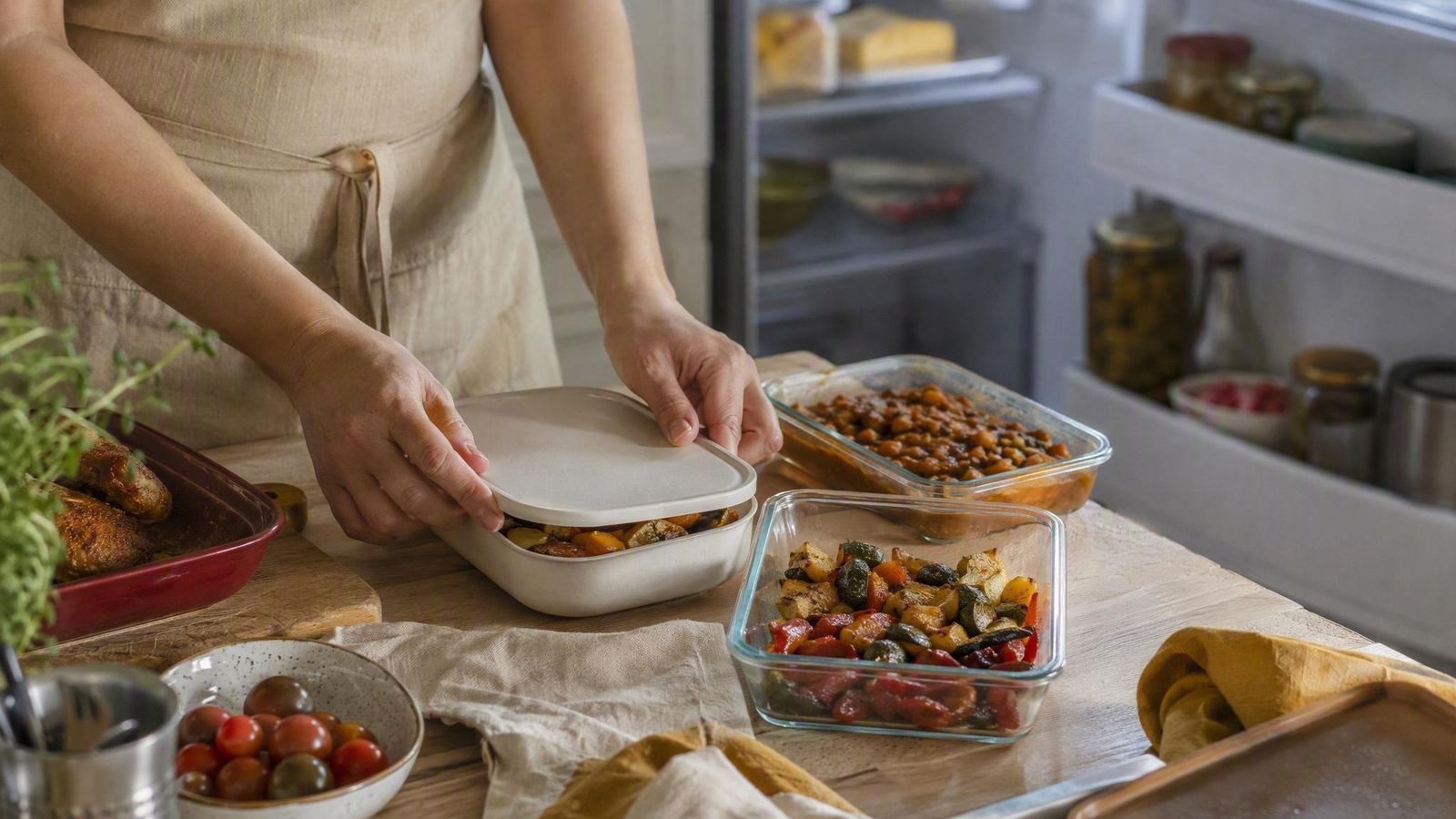
Letting a big pot cool on the stove overnight is the classic way home cooks park food in the zone for hours. USDA's answer is to break the food up and get it cold quickly.
Getting food back out of the zone
Reheating is the exit door on the hot side of the zone, and USDA gives an exact target rather than a vibe like "steaming hot".
What-if scenarios at a glance
| Scenario | Where the food sits | What to do |
|---|---|---|
| Lunch waits on a desk all morning | Inside the zone the whole time | Pack cold sources or use the office fridge; see the packed lunch guide |
| Groceries ride in a hot car | Inside the zone, clock shortened by heat | Drive straight home, refrigerate perishables immediately |
| Dinner pot cools on the counter | Inside the zone while it cools | Shallow containers, into the fridge within the USDA window above |
| Soup packed steaming in a preheated thermos | Held on the hot side of the zone | Keep the thermos closed until eating; see the thermos rule in the packed lunch guide |
Common questions
Does the Danger Zone apply to food that looks and smells fine? Yes. The bacteria USDA is concerned about do not reliably change the look, smell, or taste of food, so the rule runs on time and temperature, not on your senses.
Does the clock reset if I put warm food back in the fridge? No. Time in the zone accumulates. Refrigerating food pauses the problem; it does not erase time already spent warm.
Is bread or whole fruit covered by this? The rule is about perishable food: meat, poultry, eggs, dairy, cooked grains and vegetables, cut fruit, and similar items. Shelf-stable foods are the basis of our no-fridge lunch ideas.
How does this connect to the sit-out rule? They are the same system: the zone defines where growth is fast, and the time rule caps how long food may stay there. Full detail in how long can food sit out.
Sources
- USDA FSIS: Danger Zone (40°F - 140°F) · www.fsis.usda.gov (accessed 2026-08-31)
- USDA FSIS: Keeping 'Bag' Lunches Safe · www.fsis.usda.gov (accessed 2026-08-31)
- USDA FSIS: Leftovers and Food Safety · www.fsis.usda.gov (accessed 2026-08-31)