How long can food sit out?
Perishable food gets a short, fixed window at room temperature, and a shorter one in hot weather. That is the whole answer, and it does not bend for how the food looks, smells, or how expensive it was. Below is the exact USDA rule, why it exists, and what it means in the four situations people actually ask about: a lunch on a desk, a party spread, groceries in the car, and the pot that sat out overnight.
The rule, exactly as USDA states it
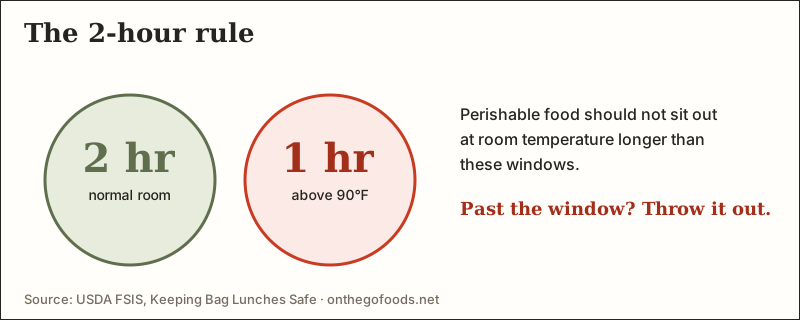
Perishable means anything bacteria love: meat, poultry, seafood, eggs, dairy, cooked rice and pasta, cooked vegetables, cut fruit, and prepared salads. The clock is cumulative, so time out of the fridge at home, in transit, and on the table all counts toward the same window. The background on the temperature band itself is in our Danger Zone guide.
The desk lunch
A lunch packed in the morning and eaten at noon usually overshoots the window unless it travels with cold sources or goes into a fridge on arrival. That is not a reason to give up on packing lunch; it is a reason to pack it the USDA way, which we walk through in how long is a packed lunch safe. If your workplace has no fridge and no microwave, build the meal from shelf-stable foods instead; see no-fridge lunch ideas and no-microwave lunches.
The buffet or party spread
Party food fails quietly because the spread goes out before guests arrive and stays out through dessert. Set food out in small batches, keep backups in the fridge, and when the gathering winds down, deal with leftovers promptly rather than letting them ride on the counter.
Groceries in the car
The window in the rule above covers the whole trip: checkout line, drive, and unloading. Hot weather triggers the shorter limit, and a closed car heats well past the outdoor temperature. Shop cold items last, drive straight home, and skip the extra errand when there is meat or dairy in the trunk. USDA does not publish an extra allowance for insulated grocery bags, so treat them as a buffer, not a license.
Food left out overnight
This is the question that brings most people here, so here is the plain answer: food left out overnight has been at room temperature far past the USDA window, and it should be discarded. That holds even if it was covered, even if the kitchen was cool, even if it still smells fine, and even if reheating is planned. USDA does not publish any overnight exception or any method for making that food safe again. Toss it, and treat the loss as tuition.
Scenario table
| Scenario | How the rule applies | The call |
|---|---|---|
| Lunch on a desk until noon | Clock runs from the home fridge to the first bite | Pack cold sources or refrigerate on arrival |
| Buffet or party spread | Clock runs per dish from the moment it is set out | Small batches out, backups in the fridge, refrigerate leftovers promptly |
| Groceries in a warm car | Clock runs from checkout, shortened in hot weather | Straight home, perishables into the fridge first |
| Anything perishable left out overnight | Far past the window, no exceptions published | Discard it |
Common questions
Can I just reheat food that sat out too long? No. Reheating targets exist for properly stored leftovers, not as a rescue for food that overstayed the window. Some bacteria leave behind toxins that heat does not remove.
Does covering food or keeping the AC on change the rule? A cooler room helps at the margin, but USDA publishes one window for room temperature and a shorter one for hot conditions, nothing in between. Covering food protects it from contamination, not from time.
Do sealed store-bought items count? Unopened shelf-stable products are fine out of the fridge. Anything labeled keep refrigerated, and anything from the deli or dairy case, follows the perishable rule above.
Does the clock restart when food goes back in the fridge? No. Time in the window adds up across the day.
Sources
- USDA FSIS: Keeping 'Bag' Lunches Safe · www.fsis.usda.gov (accessed 2026-08-31)
- USDA FSIS: Danger Zone (40°F - 140°F) · www.fsis.usda.gov (accessed 2026-08-31)