How long can butter sit out at room temperature?
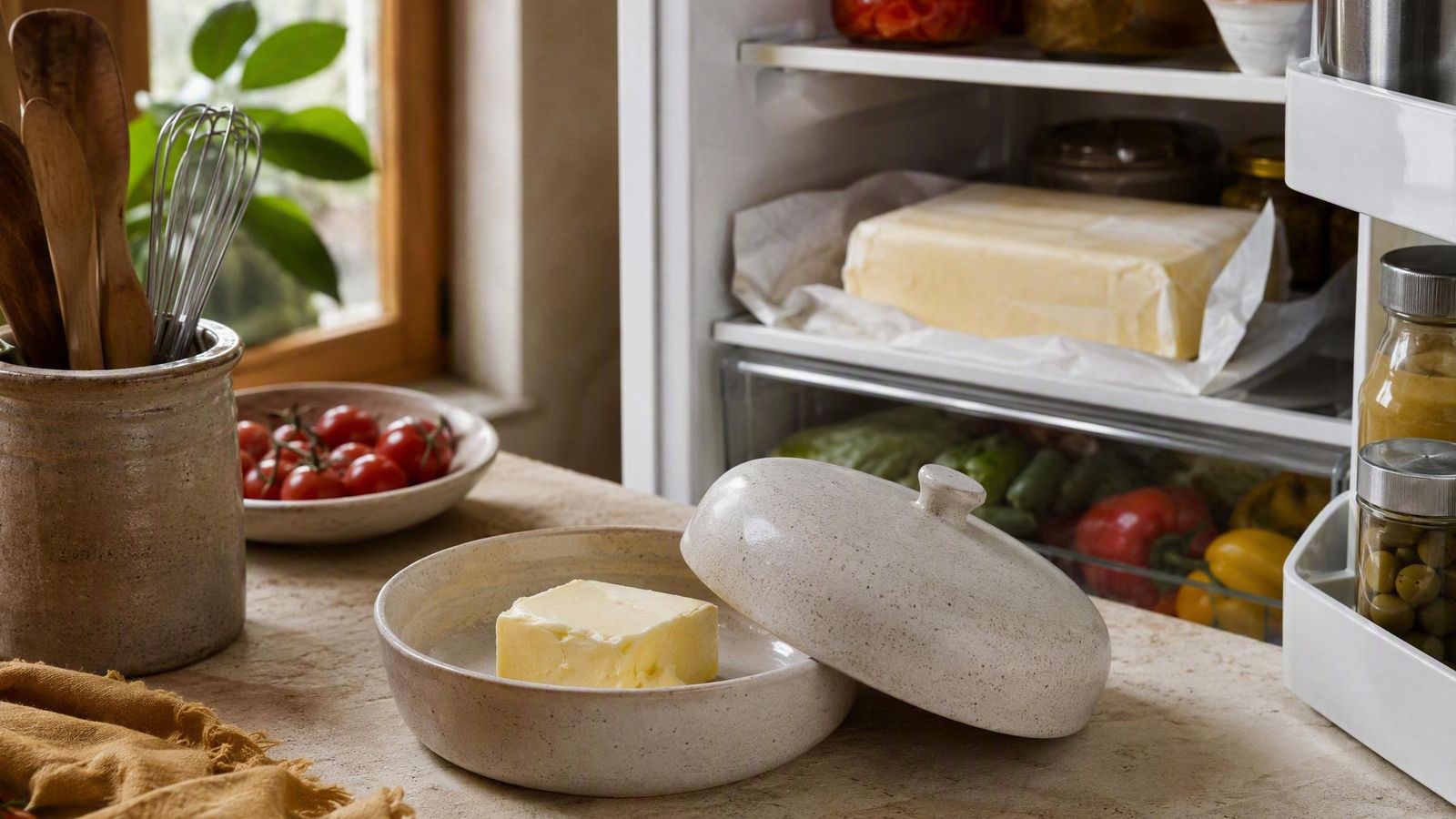
Butter is the rare dairy-case item with an official room-temperature allowance: USDA's FoodKeeper dataset gives it a short countertop window, one of very few sourced numbers of its kind. That is why a butter dish on the counter is a defensible habit and not a food-safety scandal. Below is the exact window, what FoodKeeper honestly does not publish about butter, the butter dish routine that keeps the convenience without stretching the rule, and what changes for hot kitchens and spreadable blends.
The official window
Beyond that window, and for any butter you are keeping longer, refrigerate. And here is the honest gap: FoodKeeper does not publish a refrigerator or freezer day-window for butter; its butter row carries only the pantry guidance above. Sites quoting exact butter fridge-months or freezer-months are drawing on something other than this dataset, so we do not print those numbers. The workable rule that falls out of what is published: keep a small amount out for spreading, keep the rest cold, and let the package date guide the refrigerated stock.
The butter dish routine
The dish on the counter works when it holds only what the published window covers: a small portion, restocked from the refrigerated package as it is used, never the other way around. Covered matters, because light and open air cost flavor fast even inside the window. A clean knife matters too; toast crumbs and traces of other foods shorten the life of everything in the dish. When the routine slips and a dish has been sitting out longer than the window, the dish portion goes, not the whole supply, which is exactly why the routine keeps the out-portion small.
Salted vs unsalted: what we can honestly say
Kitchen folklore says salted butter lasts longer on the counter. The FoodKeeper dataset does not distinguish: there is no separate verified window for salted and unsalted butter, so we will not invent a differential. Apply the same countertop window to both. If you want a cautious personal tiebreaker, keep unsalted in the fridge for baking and spread from salted, but treat that as a preference, not a published rule.
Hot kitchens change the math
The countertop allowance assumes ordinary room temperature, and summer does not always cooperate. The concept that frames every warm-room call on this site applies here too.
A kitchen in a heat wave, a dish on a sunny windowsill, or butter riding in a hot car after the grocery run is a warmer, faster version of the countertop, and butter also simply melts, so a pooling dish is a quality loss before it is anything else. In hot weather, shrink the amount left out or park the dish in the fridge between meals. The full framework is in our Danger Zone guide.
Spreadable blends are a different product
Butter blended with vegetable oils, whipped butter, and spreads with added dairy are not the FoodKeeper butter row; they are their own products with their own labels, and their labels win. The same label-first rule applies to plain butter, too: if your package instructs differently from the general guidance here, follow the package. Margarine is likewise its own product and outside this page entirely.
Everyday butter scenarios
| Scenario | How the rule applies | The call |
|---|---|---|
| Butter left out overnight | At ordinary room temperature, overnight sits inside the window above | Fine; carry on with the dish routine |
| Butter dish out all week | Past the published window | Discard the dish portion and restock small from the fridge |
| A stick softening on the counter for baking | A few hours on the counter sits comfortably inside the window | Fine; standard baking practice |
| Butter in a hot car after the grocery run | Hot conditions, the Danger Zone concept above, plus outright melting | Get it cold quickly and judge the texture when you unpack |
| Spreadable olive oil blend on the counter | Not covered by the FoodKeeper butter row | Follow that product's label |
Butter counter routine
- Keep out only a small covered dish, sized to the published window
- Restock the dish from the refrigerated package, never the reverse
- Use a clean knife; crumbs shorten the life of the whole dish
- In hot weather, park the dish in the fridge between meals
- Blends, whipped products, and margarine follow their own labels and skip the dish
Common questions
Is butter left out overnight safe? At ordinary room temperature, overnight fits inside the FoodKeeper window cited above. A heat-wave kitchen is the exception worth respecting.
Does butter need to be refrigerated at all? For anything beyond the countertop window, and for the bulk of your supply, yes. The dish is the exception the dataset allows, not the storage plan.
Can I freeze butter to stock up? FoodKeeper's butter row publishes no freezer window, and we only print numbers we can source, so no number here. For long keeping, the refrigerator plus the package date is the route we can stand behind.
Is butter the same story as mayonnaise? Different products, similar theme: the container on the counter is rarely the real risk, and the details for the other famous counter-dweller are in how long can mayo sit out. For the general rule covering everything else on the table, see how long can food sit out.
Sources
- USDA FSIS: FoodKeeper Data (official dataset) · www.fsis.usda.gov (accessed 2026-08-31)
- USDA FSIS: Danger Zone (40°F - 140°F) · www.fsis.usda.gov (accessed 2026-08-31)