Road trip food: what to pack, keep cold, and eat in the car
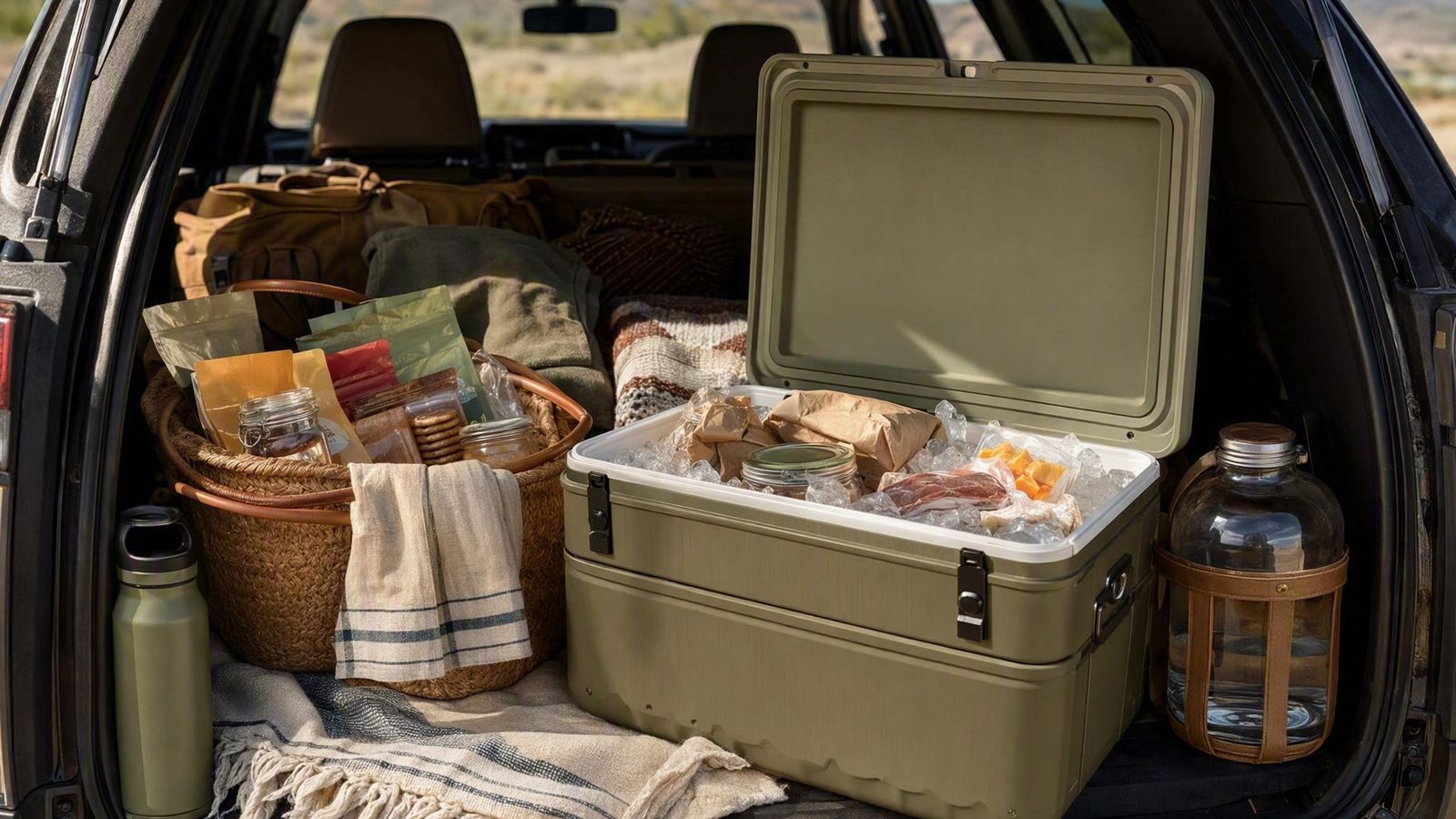
Road trip food comes down to three decisions you make before backing out of the driveway: which foods ride loose in the cabin, which ones need a real cooler, and how the clock on perishable food shapes your stops. This hub answers all three, then hands you the deeper guides: snacks graded for melt and mess, actual meals you can assemble at a rest stop, the packing method that keeps a cooler cold, and what to eat once you check into the hotel.
In this hub
Road trip meals: real food between the drive-thrus
How to pack a cooler: the USDA method, step by step
Hotel room meals: eat well with whatever the room gives you
One clock rules the whole trip
A car is the hardest place to keep food safe. The cabin warms up, the trunk warms up faster, and a parked car in the sun turns into an oven while you tour a viewpoint. Every food decision on this page starts from a single federal time rule.
Plan by trip length, not by craving
The same sandwich is a fine choice on a short hop and a bad one on a multi-day drive. Match your packing strategy to how long the food will be away from a refrigerator, then pick foods that fit the strategy.
| Trip length | Food strategy | Where it rides |
|---|---|---|
| Short hop, eaten before the left-out clock above runs out | Almost anything, packed straight from the refrigerator into an insulated bag | Insulated bag on the back seat floor, not in the trunk |
| Full day on the road | Shelf-stable snacks loose in the cabin; every perishable item in a real cooler | Cooler in the coolest, shadiest spot of the car, opened as little as possible |
| Multi-day drive | Shelf-stable base plus a cooler you re-ice along the way | Restock ice at stops; once the ice runs out, perishables are done, per the leftover rule below |
That list is your cabin food. Everything on it can sit in a tote bag between the seats all day without a second thought, which is why our road trip snacks guide builds on it first and grades everything else for melt and mess.
The cooler strategy in three moves
If anything perishable is coming along, the cooler is not optional gear, it is the refrigerator for the trip. Three USDA rules carry most of the weight.
The full method, including packing order, raw meat isolation, and the mistakes that melt ice by noon, lives in the cooler packing guide. For what to actually put inside it, see road trip meals.
Eating in a moving car: the reality check
Plenty of food that travels safely still fails in the car, because eating at highway speed is a one-hand, eyes-forward activity for the driver and a crumb festival for everyone else. Judge every candidate against the seat it will be eaten in.
- One hand, or it waits for a stop. The driver's food needs to be dry, bite-size, and eatable without looking down. Anything with a dip, a wrapper fight, or a drip goes to the passengers or the rest stop.
- Open everything before you leave. Pre-open stubborn packaging, portion snacks into cups or bags, and put drinks where they can be grabbed without leaning.
- Contain the mess before it happens. A bag lined with a towel, a stack of napkins in the door pocket, and a dedicated trash bag turn a messy cabin problem into a non-event.
- Kids eat what the seat allows. Cut foods to appropriate sizes for each child, favor spill-resistant containers, and keep anything sticky for stops.
The leaving-home checklist
Before you pull out of the driveway
- Every food item is assigned: cabin tote for shelf-stable, cooler for perishable, nothing rides unassigned
- Cold sources went into the freezer the night before, and the cooler food is refrigerator-cold going in
- Cooler is in the shadiest spot in the car, covered, with drinks in their own cooler or tote
- Driver snacks are one-hand foods, pre-opened, within reach
- Trash bag, napkins, wipes, and a knife or scissors for packaging are in the door pocket
- You know roughly when and where you will eat, so the left-out clock never sneaks up on you
The road trip food guides
Road trip snacks
Snacks graded for melt, crumbs, and one-hand eating, anchored to the USDA no-cooler list.
Road trip meals
Make-ahead cold mains, the frozen-sandwich method, and rest-stop assembly bowls.
How to pack a cooler
Block ice, reverse-order packing, raw meat isolation, and the ice-remaining rule.
Hotel room meals
What to eat at the destination, organized by the equipment actually in your room.
The rules behind every recommendation here are unpacked in the food safety hub, and if your trip has no cooler at all, the no-refrigeration hub is built for exactly that constraint.
Sources
- USDA FSIS: Keeping 'Bag' Lunches Safe · www.fsis.usda.gov (accessed 2026-08-31)
- USDA FSIS: Food Safety While Hiking, Camping & Boating · www.fsis.usda.gov (accessed 2026-08-31)