Hotel room meals: eat well with whatever the room gives you
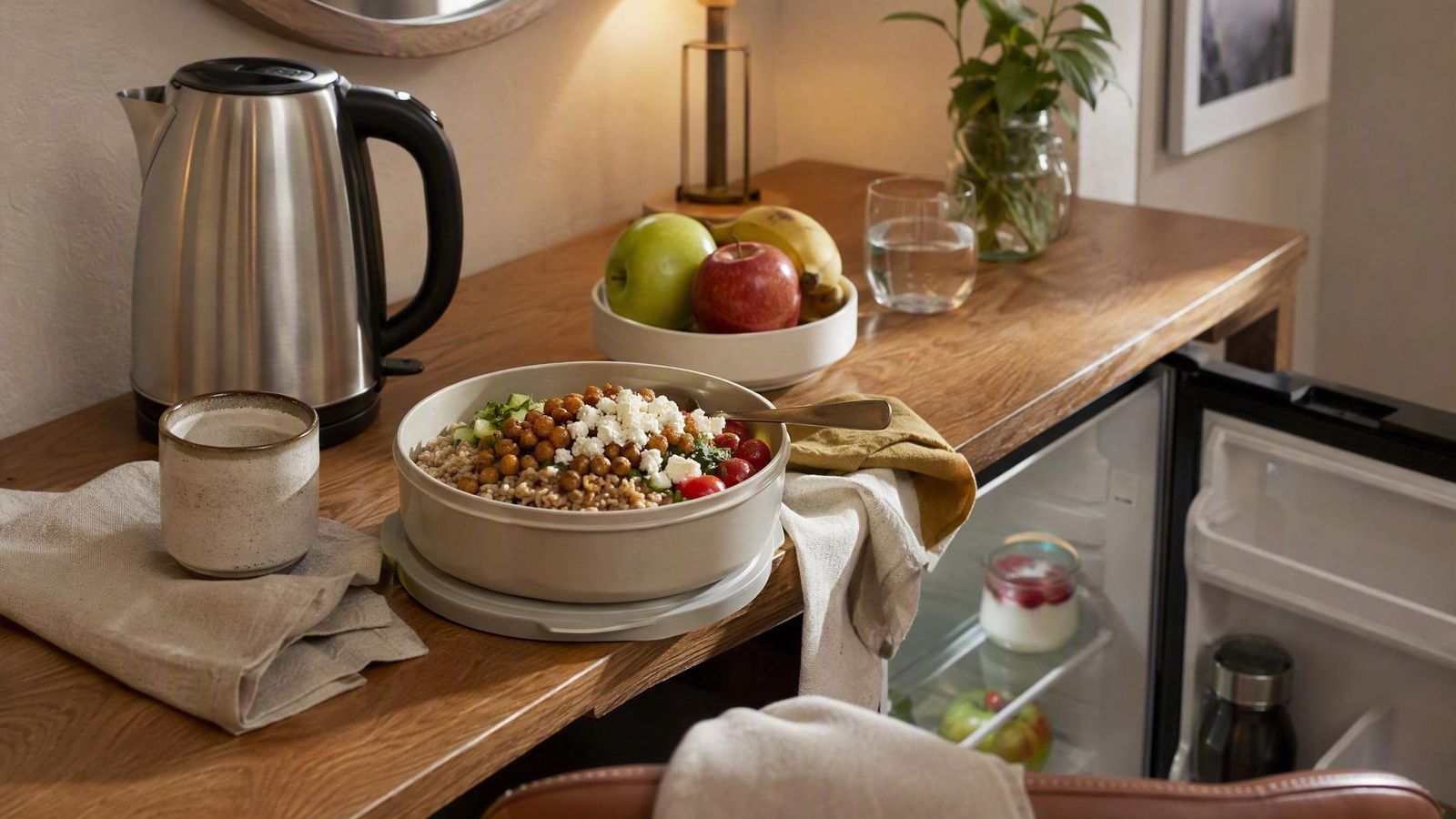
The right hotel room meal depends on one thing: what equipment the room actually has. Before you shop, check for four items, a kettle or coffee maker, a microwave, a minifridge, and how cold that minifridge really gets. Then build meals for your tier instead of fighting the room. Here is the full system, tier by tier, plus the one-stop grocery run and the food safety clock for rooms with no working fridge.
Know your tier before you shop
Hotel equipment stacks: a room with a microwave usually has a minifridge too, and everything above tier zero can at least make hot water happen. Identify your tier at check-in, then shop once for the whole stay.
| Tier | What the room has | Meal families that work |
|---|---|---|
| Tier zero | Nothing but a sink and an ice bucket | Shelf-stable spreads and crackers, canned pouches, whole fruit, jerky, trail mix, bakery bread |
| Kettle tier | Kettle or coffee maker | Everything above, plus instant oatmeal, couscous cups, instant noodle and soup cups, tea and hot drinks |
| Microwave tier | Microwave, usually with a minifridge | Everything above, plus steam-bag rice and vegetables, canned soups and chili, baked potatoes, reheated grocery-deli mains |
| Minifridge tier | A fridge that is actually cold | Everything above, plus yogurt and milk breakfasts, deli sandwiches built in the room, salads, cheese, and safe leftovers |
- Tier zero, no equipment. Build board-style meals: a bakery loaf, shelf-stable spreads, canned fish or meat spread pouches, whole fruit, nuts, and sturdy crackers. Open only what gets finished, since there is nowhere to keep an opened can cold unless you brought a cooler.
- Kettle tier. Hot water converts the room into a soft kitchen: instant oatmeal with dried fruit and nuts for breakfast, couscous or noodle cups for dinner, and hot drinks that make a budget evening feel less like camping. Rinse the kettle before and after; brew only water in a coffee maker, not soup.
- Microwave tier. Real dinners appear: steam-bag rice with a pouched protein-family topping, canned chili over microwave-baked potatoes, and grocery-store deli mains reheated in the room. Bring or buy one microwave-safe bowl with a lid and the tier doubles in usefulness.
- Minifridge tier. Now breakfast is yogurt with granola, lunch is a deli sandwich built at the desk, and dinner leftovers survive to tomorrow. This is the only tier where perishable groceries make sense in quantity, and only after the fridge passes the reality check below.
The one-stop grocery run
One store visit on arrival day covers the stay. Buy shelf-stable for your worst-case tier and add perishables only if the fridge earns your trust.
- Base carbs: bakery bread or rolls, crackers, instant oatmeal, couscous or noodle cups, steam-bag rice for microwave rooms
- No-fridge mains: peanut butter, canned tuna or chicken pouches, canned chili or soup, jerky, shelf-stable spreads
- Produce that needs no cold: apples, bananas, clementines, cherry tomatoes eaten within a day, whole carrots
- Fridge-tier additions: yogurt, milk, deli meat, sliced cheese, bagged salad, hummus
- Gear the room will not have: one lidded microwave-safe bowl, a real utensil per person, a small cutting knife if you check luggage, paper towels, and a few zip-top bags
Minifridge reality and the no-fridge clock
Hotel minifridges range from genuinely cold to barely cooler than the room, and some beverage chillers are not designed to hold food at refrigerator temperature at all. Give the fridge a night with a water bottle inside: if the bottle is properly cold by morning, treat it as a fridge; if it is merely cool, treat the room as tier zero for perishables. When there is no trustworthy fridge, one federal rule sets the clock.
The discard logic follows from those rules, no math required: if you cannot say for sure how long the takeout sat out or whether the weak minifridge kept it truly cold, it goes in the trash. A room-temperature night is not a judgment call, it is an answer. The full cooler method is in the cooler packing guide, and fridge-free eating has its own playbook in no-refrigeration lunch ideas.
What cheap actually means here
We are not going to invent dollar figures, because grocery prices vary by city and season. The honest version of a cheap hotel meal is structural: one grocery run replacing several restaurant meals is where the savings live. Breakfast from the grocery bag instead of the lobby cafe, lunch assembled in the room on checkout mornings, and restaurant money spent on the one dinner you actually care about. That trade is the whole strategy, and it also happens to travel home; the same logic powers our budget meal prep guide.
The week-stay checklist
Settling in for a longer stay
- Identify the tier on day one: kettle, microwave, minifridge, and run the overnight water bottle test
- Do the single grocery run against the tier list above, shelf-stable first
- Set up a dry pantry corner away from the sun and the heater
- Perishables live in a fridge that passed the overnight check, or an iced cooler, never on the counter
- Takeout gets eaten or refrigerated promptly, and anything with an unknown history gets discarded
- Restock ice from the machine if a cooler is the fridge, before the old ice disappears
- Pack out the pantry on checkout morning; the shelf-stable leftovers ride home fine
Hotel breakfasts deserve their own morning plan: the breakfast on the go hub and its no-cook breakfast ideas map straight onto kettle-tier and tier-zero rooms. And the drive that got you here is covered end to end in the road trip food hub.
Sources
- USDA FSIS: Keeping 'Bag' Lunches Safe · www.fsis.usda.gov (accessed 2026-08-31)
- USDA FSIS: Food Safety While Hiking, Camping & Boating · www.fsis.usda.gov (accessed 2026-08-31)