No-cook breakfast ideas, graded by what they actually require
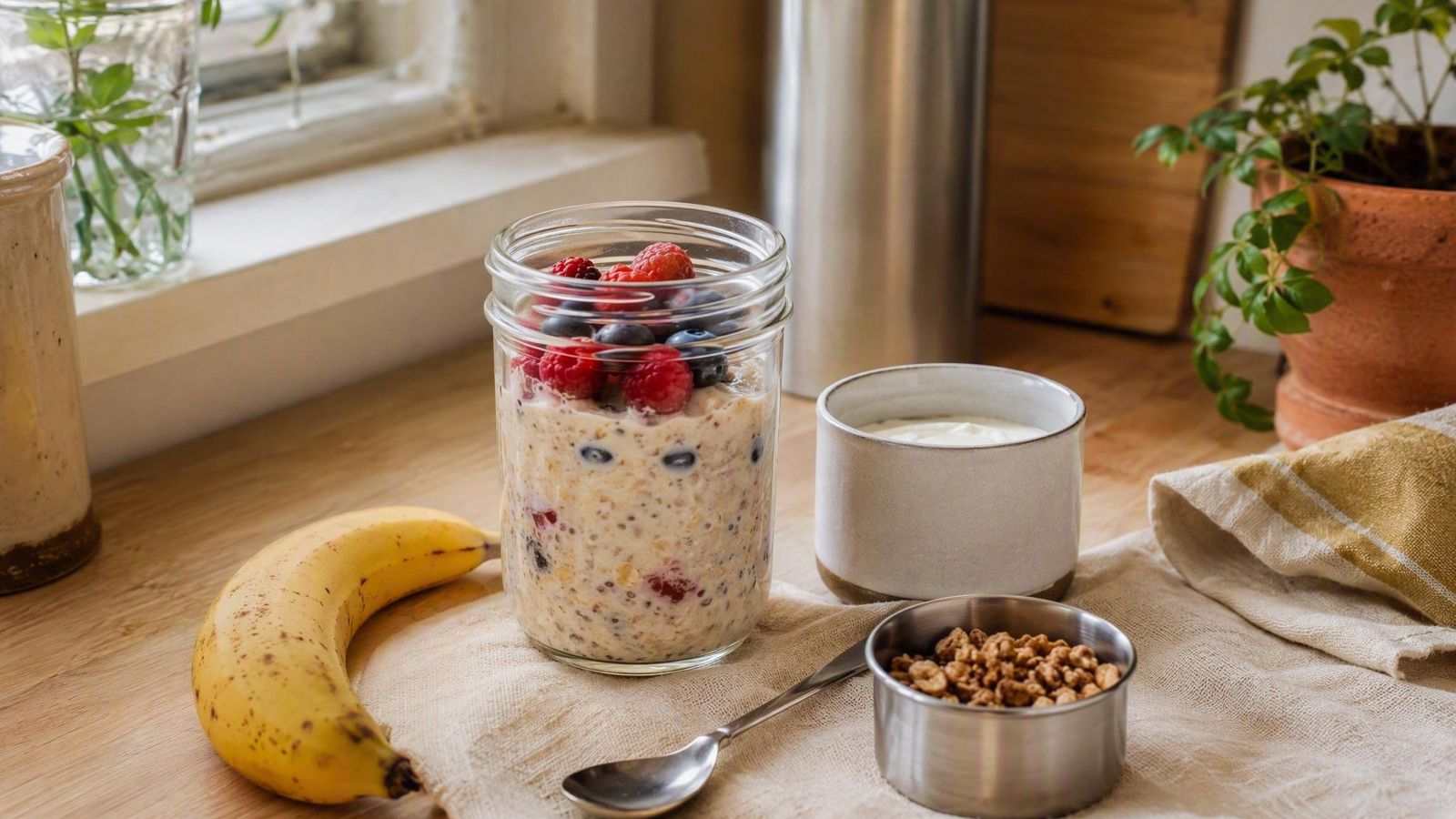
Search for no-cook breakfasts and half the results still ask you to bake, toast, or scramble something. This page holds the line: every idea below involves zero heat, and each one is graded honestly as either Grade A, which needs no equipment at all, not even a refrigerator, or Grade B, which needs a fridge the night before but nothing else. Pick your grade based on what your morning actually has available.
What zero equipment really means here
Grade A means shelf-stable from pantry to bag: no stove, no fridge, no blender, nothing beyond a spoon. Grade B means the food is assembled or stored cold overnight, so a refrigerator is the only appliance involved, and the morning itself is grab, pack, leave. If your situation removes the fridge entirely, such as a hotel room or a campsite, stay in Grade A or read our no-refrigeration guide for the stricter rulebook.
Grade A: no fridge, no tools, no heat
- Nut butter packet with a banana or apple. Single-serve nut butter packets are shelf-stable and portion themselves, and whole fruit travels loose in any bag without a container. Squeeze the packet directly onto bites of fruit, so there is no knife and no plate. Contains peanuts or tree nuts depending on the packet, so check labels if you share a household with an allergy.
- Trail mix and a whole orange. A fruit-and-nut mix rides in a zip bag for days without complaint, and an orange arrives in its own wrapper. Portion the mix into small bags on Sunday so weekday mornings are a two-second grab. Contains tree nuts and often peanuts; seed-based mixes swap in cleanly.
- Shelf-stable milk box with single-serve granola. Aseptic milk cartons need no refrigeration until opened, and a granola cup becomes the bowl. Pack a spoon and you have a cereal breakfast anywhere, including a car or a desk. Contains milk and usually oats and wheat; shelf-stable plant milks work the same way.
- Fruit-and-nut based bars. Bars built mainly from dates, nuts, and dried fruit hold their shape in a warm bag better than anything chocolate-coated. Keep two in the bag as the permanent backup breakfast for mornings that fall apart. Nut content varies widely by brand, so read the label rather than assuming.
- Whole-grain crackers with a shelf-stable spread. Sturdy crackers plus a squeeze packet of honey or a nut butter packet is a build-it-at-the-desk plate that never sees a fridge. Pack crackers in a rigid container so they arrive whole. Contains wheat; the nut butter version adds peanuts or tree nuts.
Grade B: fridge overnight, nothing else
- Overnight oats. Rolled oats soaked overnight in milk or a plant milk soften completely without heat, which is the whole trick. Build them in the jar they travel in, lid on, and the morning step is opening the fridge. Contains milk in the dairy version and oats; add-ins like nuts change the allergen picture.
- Yogurt parfait jar. Yogurt layered with fruit travels well in a leakproof jar; keep the granola in a separate small bag and add it at the desk so it stays crisp instead of dissolving. Assemble the night before. Contains milk, and the granola usually brings oats and wheat.
- Chia pudding. Chia seeds stirred into milk or juice set into a spoonable pudding overnight with no cooking at all. Make several jars at once since the recipe is stir, refrigerate, forget. Dairy-free versions are straightforward, so this one flexes around milk allergies.
- Cheese, fruit, and cracker box. A divided container with hard cheese, grapes, and sturdy crackers is a breakfast board that needs zero morning effort if you pack it the night before. Hard cheeses handle the commute better than soft ones. Contains milk and wheat.
The one rule that governs Grade B in transit
Grade A foods do not care how long your commute runs. Grade B foods do, because milk, yogurt, and cheese are perishable the moment they leave the fridge, and the clock does not pause for traffic.
If you eat within that window of leaving home, a normal bag is fine. If breakfast lands later, pack Grade B items with a cold source or move to a Grade A idea. The full rulebook lives in our food safety hub.
Every idea at a glance
| Idea | Equipment | Fridge needed | Pack note |
|---|---|---|---|
| Nut butter packet + whole fruit | None | No | Fruit rides loose; packet needs no spoon |
| Trail mix + orange | None | No | Pre-portion into small bags on Sunday |
| Shelf-stable milk + granola cup | Spoon | No, until opened | The granola cup doubles as the bowl |
| Fruit-and-nut bar | None | No | Keep two in the bag as permanent backup |
| Crackers + shelf-stable spread | None | No | Rigid container saves the crackers |
| Overnight oats | Jar, spoon | Yes, overnight and in transit | Build in the travel jar; eat within the time rule |
| Yogurt parfait jar | Jar, spoon | Yes, overnight and in transit | Granola travels separately to stay crisp |
| Chia pudding | Jar, spoon | Yes, overnight and in transit | Make several jars in one batch |
| Cheese, fruit, cracker box | Divided container | Yes, overnight and in transit | Hard cheese survives the commute best |
Tonight, in five minutes
No-cook breakfast setup checklist
- Decide tonight whether tomorrow is a Grade A or Grade B morning
- Grade B: assemble the jar or box now and refrigerate it in its travel container
- Grade A: stage the fruit, packet, or bar next to your keys
- Long commute plus Grade B: put a frozen cold source in the freezer now
- Drop a spare fruit-and-nut bar in the bag as the fallback
If your mornings allow a little Sunday work, the make-ahead breakfast guide covers batch routes, and if speed of eating is the real constraint, the grab-and-go breakfast page grades ideas by how well they work one-handed. Both live in the breakfast on the go hub.
Sources
- USDA FSIS: Keeping 'Bag' Lunches Safe · www.fsis.usda.gov (accessed 2026-08-31)