Meal prep ideas that actually travel well
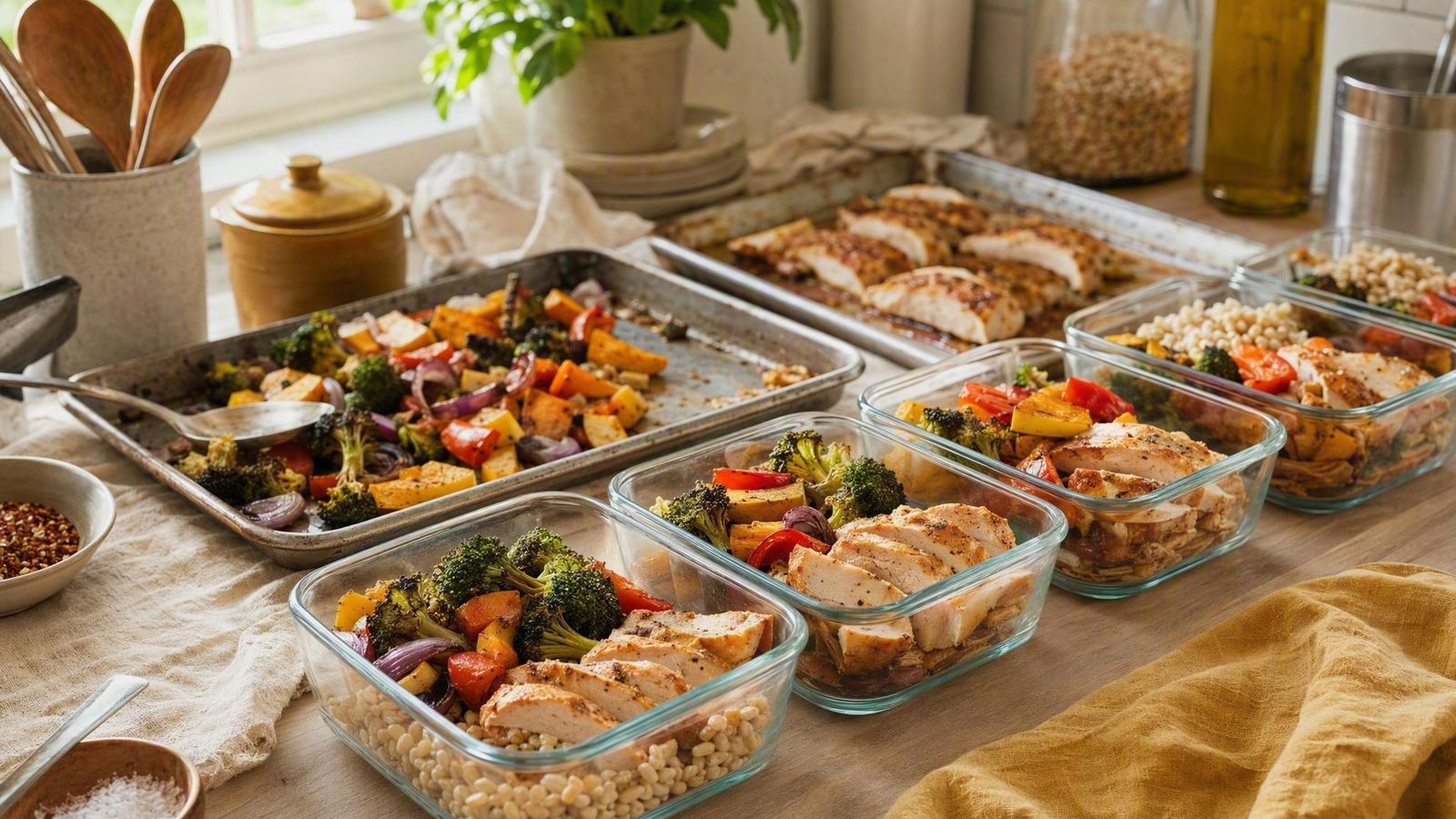
Good meal prep is graded on the trip, not the plate. A dish that looks great on Sunday but arrives at your desk soggy, separated, or unsafe was never a real meal prep idea. This hub grades every idea on three portability questions: does it pack well, does it survive without a reheat, and does it freeze, so the food you make ahead is still food you want by Thursday.
In this hub
Cheap meal prep ideas, without made-up prices
Meal prep for beginners: one Sunday session, five desk lunches
Grade every recipe for the trip, not just the plate
Most meal prep lists stop at "make a big batch." That skips the part that decides whether the plan works: what happens between your kitchen and your mouth. Before a recipe earns a spot in your rotation, run it through three grades. Packs well: it holds its texture in a container, does not leak, and does not need last-second assembly. No-reheat friendly: it is genuinely good cool or at room temperature, which matters on days without a microwave; see no-microwave lunch ideas for that whole category. Freezes well: it goes past the fridge window without turning to mush, which is the core of freezer meals.
A recipe does not need all three grades. It needs the one that matches your week. If your office has a fridge and microwave, packs-well is enough. If you commute long or eat outside, no-reheat is the grade to chase. If you cook in big monthly batches, freezes-well carries the plan.
Prep ideas by situation
| Situation | Idea | Why it travels | Packing note | Hot or cold at eating time | Make-ahead and allergen note |
|---|---|---|---|---|---|
| Desk lunch, fridge and microwave available | Burrito-style rice and bean bowls with roasted vegetables | Rice and beans reheat evenly and do not degrade in a container | Keep salsa or crema in a separate small cup so nothing goes soggy | Hot after a reheat | Assemble bowls on prep day; add cheese if you like, which adds milk as an allergen |
| No-microwave day | Pasta salad with vinaigrette, chickpeas, and firm vegetables | Vinaigrette-dressed pasta improves as it sits instead of drying out | Pack in the eating container with a fork inside the lid | Room temperature by design | Dress on prep day; contains wheat, and swap in gluten-free pasta if needed |
| No-microwave day | Frittata slices with potatoes and peppers | Frittata is built to be eaten cool and cuts into tidy portions | Wrap slices individually so they grab-and-go all week | Cool, straight from an ice-pack bag | Bake once, slice once; contains egg, plus milk if made with cheese |
| Grab-and-go breakfast | Baked oatmeal cups with fruit | They are solid, dry to the touch, and eat one-handed | Store stacked with parchment between layers | Room temperature, no reheat needed | Bake a tray on prep day; contains oats, and contains tree nuts if you add walnuts |
| Grab-and-go breakfast | Overnight oats in single jars | The jar is the prep, the storage, and the serving dish | Fill jars only to the shoulder so stirring is possible | Cold, straight from the fridge | Mix the night before or on prep day; contains milk unless made with a plant milk, and oats |
| Big-batch week | Bean and vegetable chili portioned flat in freezer bags | Flat-frozen portions thaw fast and travel in a thermos later | Label every bag with contents and the freeze date | Hot, reheated fully before eating or packing | A natural budget-prep anchor; check canned goods if avoiding gluten |
How long prepped food actually keeps
Meal prep lives or dies on storage math. The whole point is cooking once and eating for days, so the USDA leftover windows are the boundary of your plan, not a suggestion. Two rules matter most.
Practically, that means a Sunday cook covers lunches through midweek from the fridge, and the back half of the week should come from the freezer stash. If you find yourself eyeing a container and doing hopeful math, the honest answer is in how long can food sit out and the wider food safety hub.
The prep-day checklist
Run prep day like a routine, not a project
- Pick two mains and one breakfast, no more; small rotations survive, ambitious ones collapse
- Grade each pick first: packs well, no-reheat, or freezes well, matching the week ahead
- Cook the longest item first and portion everything into its travel container, not serving bowls
- Split the batch: fridge portions for the front of the week, freezer portions for the back
- Spread hot food into shallow containers right away instead of leaving pots on the stove
- Label freezer portions with the dish name and date before they go in
- Stage tomorrow's lunch at the front of the fridge so the morning is a single grab
Meal prep is a system, and systems win on repetition. Start with one situation from the table above, run it for two weeks, then add a second. The guides in this hub, from freezer meals to budget prep, each go deep on one branch of the same plan.
Sources
- USDA FSIS: Leftovers and Food Safety · www.fsis.usda.gov (accessed 2026-08-31)
- USDA FSIS: Danger Zone (40F to 140F) · www.fsis.usda.gov (accessed 2026-08-31)