Food safety on the go: the rules that actually apply
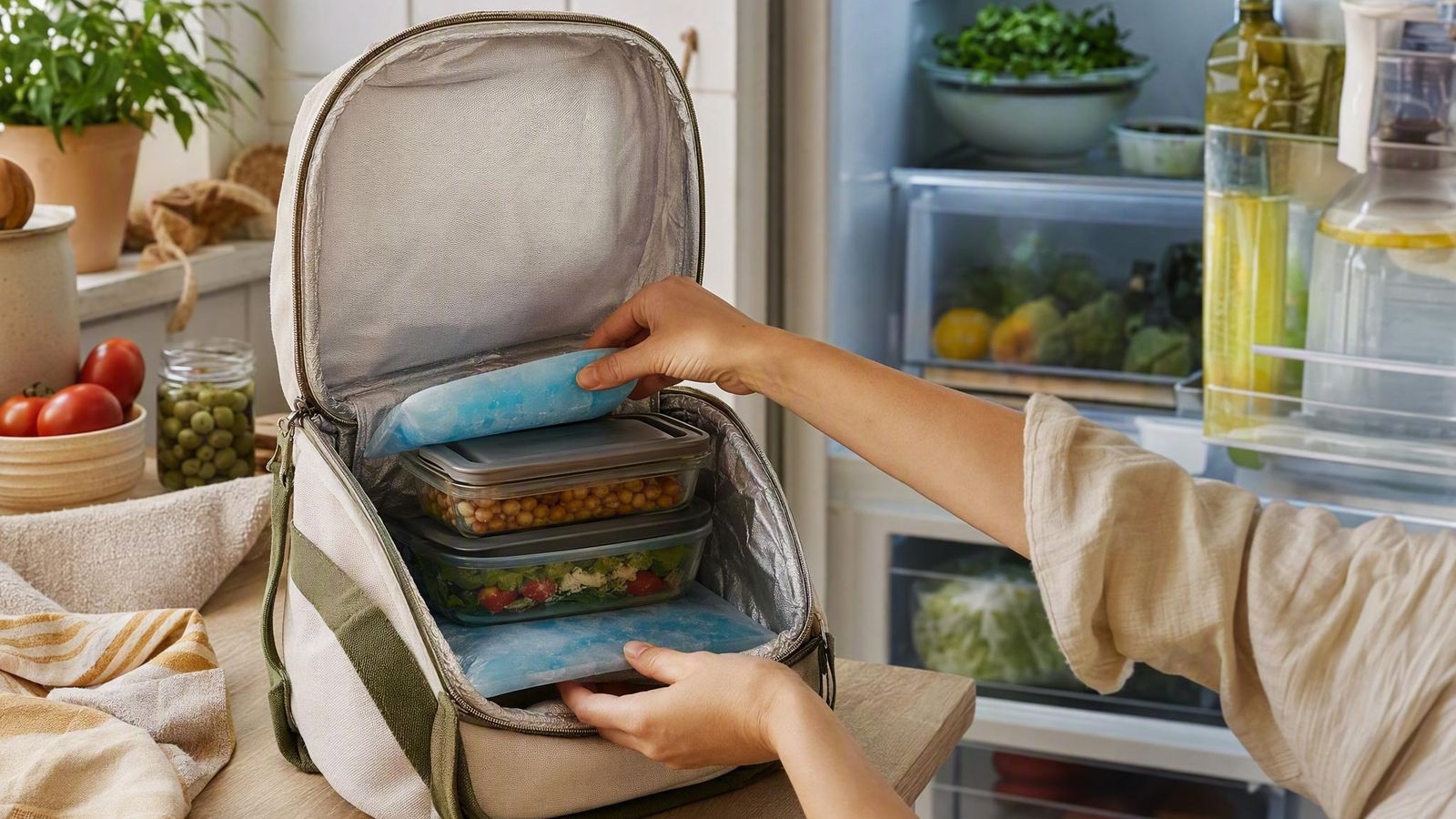
Almost every food safety question about lunchboxes, commutes, road trips, and desk drawers comes down to three USDA rules: the temperature range where bacteria thrive, the clock on food left out, and the temperature that makes reheated food safe again. Learn those three and you can answer the daily judgment calls yourself; this hub states each rule with its source, then maps your most common situations onto them.
In this hub
How long can food sit out?
How long can cooked chicken sit out?
How long can hard boiled eggs sit out?
How long is a packed lunch safe?
How long can mayo sit out?
How long can butter sit out at room temperature?
Rule one: the danger zone
Everything else in food safety is built on this range. Food is not simply "safe" or "spoiled"; it is either inside or outside the temperature band where bacteria multiply fastest, and time spent inside that band is what accumulates risk.
Notice what the rule implies for life on the move: a commute, a desk, a car trunk, and a beach bag are all just different amounts of time spent inside that band. The full breakdown lives in the danger zone guide.
Rule two: the clock on food left out
The danger zone tells you why; this rule tells you how long. It is the single most useful number for anyone who packs food in the morning and eats it hours later.
The clock starts when food leaves cold storage or stops being kept hot, not when you first notice it sitting there. Situational calls, the meeting that ran long, the groceries in the trunk, the buffet tray, are worked through in how long can food sit out.
Rule three: reheat to a real temperature
"Hot enough" is not a feeling, it is a thermometer reading. Steam and a warm container prove nothing about the center of the food.
Quick answers by situation
Here is how the three rules land on the situations readers ask about most. Each row has a deeper guide in this hub.
| Situation | What to do | Full guide in this hub |
|---|---|---|
| My lunch sat on my desk all morning with no ice pack | Apply rule two: once perishable food outruns the left-out clock, discard it rather than gambling | How long can food sit out |
| I packed chicken last night; is it still fine for today and tomorrow? | Cooked chicken lives by the refrigerator leftover window, then reheats under rule three before eating | Is cooked chicken still good? |
| Hard-boiled eggs for the week: counter or fridge? | Fridge, always; peeled or unpeeled, they are perishable and have their own storage window | Hard-boiled egg storage |
| My kid's lunchbox has no fridge at school | Build the bag around cold sources and rule two; the packed lunch guide covers the exact setup | Packed lunch food safety |
| Road trip snacks in a warm car | The hot-weather version of the clock in rule two is the one that applies; favor shelf-stable food and a real cooler | The danger zone |
| Leftovers came home from the restaurant | Refrigerate them promptly under rule two, then reheat to rule three's temperature before eating | How long can food sit out |
The guides go deeper than the table: how long can food sit out, cooked chicken storage, hard-boiled eggs, packed lunch food safety, and the danger zone itself.
Before you head out the door
The on-the-go safety checklist
- Decide up front whether each item travels hot, cold, or shelf-stable; no item rides unassigned
- Cold items: insulated bag, cold sources, packed straight from the fridge
- Hot items: preheated insulated jar, filled with fully reheated food; see the thermos method
- Know your eating time and count backward; the left-out clock starts at packing, not at hunger
- Hot day plans get the shorter version of the clock, not the standard one
- When any item's history is uncertain, throw it out; no lunch is worth the gamble
These rules are the backbone of every meal idea on this site: the work lunch hub applies them to office life, no-refrigeration meals to fridge-free days, and thermos lunches to hot food in transit. Same three rules, different bags.
Sources
- USDA FSIS: Danger Zone (40F to 140F) · www.fsis.usda.gov (accessed 2026-08-31)
- USDA FSIS: Keeping 'Bag' Lunches Safe · www.fsis.usda.gov (accessed 2026-08-31)
- USDA FSIS: Leftovers and Food Safety · www.fsis.usda.gov (accessed 2026-08-31)