Make ahead breakfast: five idea families and their honest storage windows
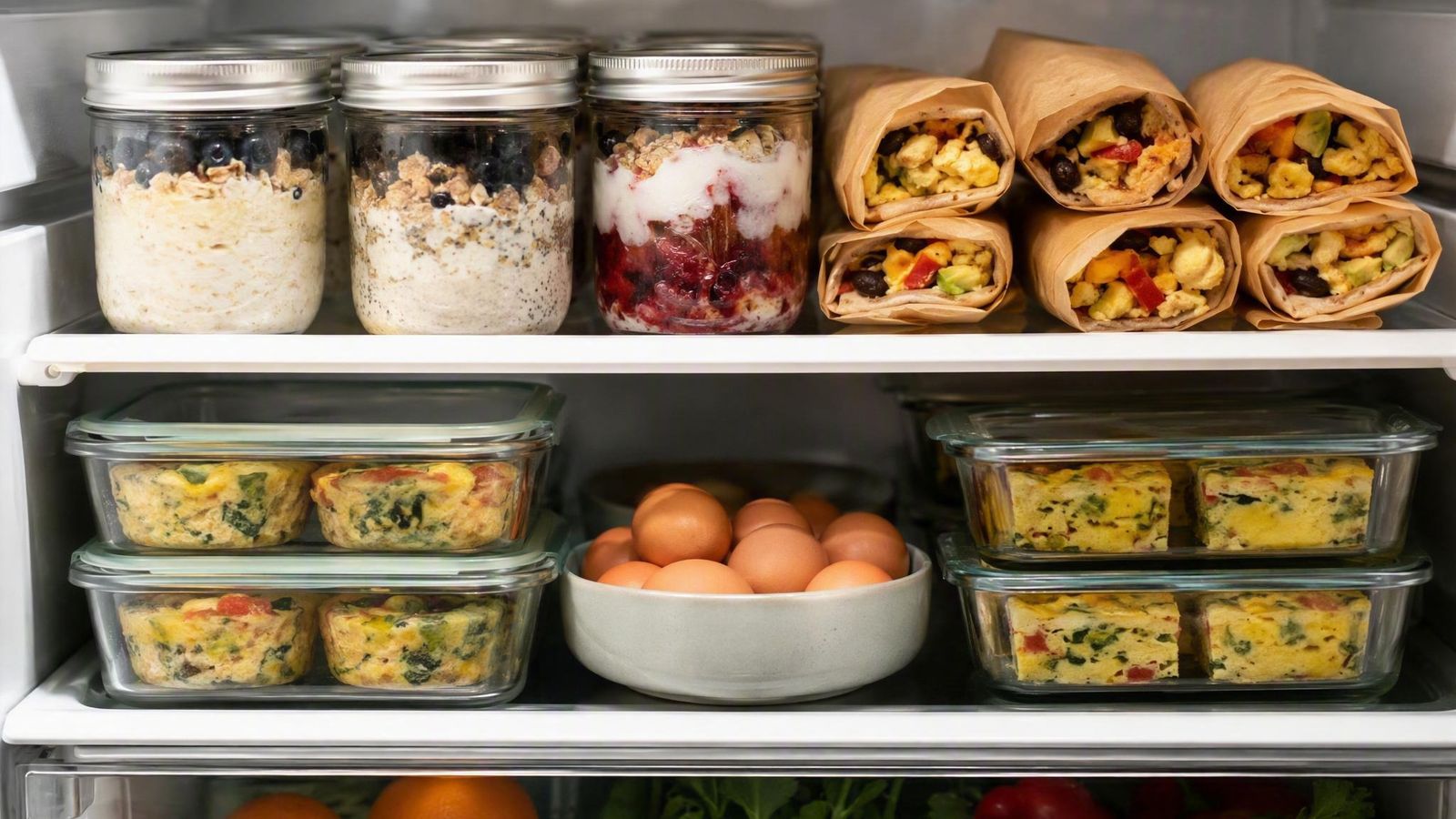
Make ahead breakfast works when you match each recipe family to its honest storage window instead of hoping a Sunday batch stretches across two weeks in the fridge. The system is simple: a fridge track for the first part of the week, a freezer track for everything past it, and a real reheat rule for anything cooked. Below are the USDA windows stated plainly, five idea families sorted onto the right track, a Sunday workflow that fills both, and the labeling habit that keeps the freezer from becoming a mystery drawer.
The storage windows, stated honestly
Every make-ahead plan on this page runs on three USDA rules. Most storage disappointment comes from ignoring the first one and treating the fridge like a freezer.
So the fridge covers roughly the front half of a workweek, and the freezer covers everything beyond it. The freezer window is a quality deadline, not a safety cliff; a wrap found later than planned is a texture question, not a danger question, as long as it stayed frozen. The third rule covers the morning of.
That applies to every cooked family below: egg bakes, sandwiches, and wraps get reheated to the real temperature, not warmed until the outside feels hot. The full rulebook lives in the food safety hub.
The five idea families
- Egg bakes and frittata. One pan, a week of squares. Why it travels: a baked egg dish holds its shape cold and eats well either cool or reheated. How to pack: slice into single portions, one container each, so nothing gets recut on a weekday. Make-ahead note: the fridge window above covers the early week; wrap extra slices individually and freeze them for the back half. Contains egg and usually milk; check labels if you add meat.
- Breakfast sandwiches. The freezer-track star. Why it travels: foil-wrapped and solid, it is the strongest one-hand breakfast a commute gets. How to pack: assemble egg, cheese, and an English muffin or biscuit, wrap in foil or parchment, and freeze in a labeled bag. Make-ahead note: leave fresh tomato and greens out before freezing and add them after reheating; they turn to mush otherwise. Contains egg, milk, and wheat.
- Burrito-style wraps. Why it travels: a tight roll keeps fillings contained with zero cutlery. How to pack: fill with scrambled egg, beans, cheese, and cooked potato, roll tightly, wrap individually, and freeze flat so they stack. Make-ahead note: watery salsa inside the roll means a soggy thaw; pack salsa in its own cup. Contains egg, milk, and wheat.
- Oats and chia jars. The fridge-only family. Why it travels: a screw-top jar is spill-proof upright and needs no morning work beyond a stir. How to pack: build jars in one batch with oats or chia, milk or a milk alternative, and fruit; keep crunchy toppings in a separate bag until eating. Make-ahead note: this family stays on the fridge track; freezing wrecks the texture, so batch only what the fridge window covers. Check labels on oats and add-ins against your needs.
- Muffins and baked goods. The sturdiest travelers and the crumbiest. Why it travels: no fridge dependence in transit and no cutlery. How to pack: freeze the batch in a labeled bag and pull one the night before, or drop a frozen one in the bag to thaw by midmorning. Make-ahead note: fruit-based add-ins like banana or blueberry keep muffins moist through freezing better than plain batters. Usually contains wheat and egg; check labels for nuts and your school's policy if these ride in a kid's lunchbox.
Which track fits each family
| Idea family | Fridge track | Freezer track | Morning move |
|---|---|---|---|
| Egg bakes and frittata | Yes, within the leftover window above | Yes, slices wrapped individually | Reheat fully per the rule above, or pack cold with a cold source |
| Breakfast sandwiches | Short stays only; built for freezing | Yes, its natural home | Reheat fully, then add fresh extras |
| Burrito-style wraps | Short stays only | Yes, frozen flat and stacked | Reheat fully; salsa cup on the side |
| Oats and chia jars | Yes, the only track | No; texture falls apart | Stir, top, spoon in the bag |
| Muffins and baked goods | Fine, but the freezer keeps quality better | Yes, whole batch in one bag | Thaw overnight or in the bag by midmorning |
The Sunday workflow
Pick exactly two families per week: one from the fridge track for the early week, one from the freezer track for everything after. More than two turns Sunday into a shift; two keeps it under a couple of hours including cleanup.
Sequence it around the oven. Start the baked item first (egg bake or muffins), and assemble the no-cook or stovetop item while it bakes (jars, or sandwich components). Let everything cooked cool before wrapping; wrapping hot food for the freezer traps steam that becomes ice on the food. Then portion, wrap, label, and load: fridge-track portions go front and center at eye level, freezer-track portions go in labeled bags. The station idea in the breakfast on the go hub is where those portions live all week, and the same batching logic scales to lunches in freezer meal prep.
The freezer-labeling checklist
Unlabeled freezer food does not get eaten; it gets archaeologically discovered. Label at wrap time, every time.
Label before it goes in
- Write the contents and the date it was made on every bag or package
- Add the reheat note: from frozen, or thaw overnight in the fridge first
- Mark the count on batch bags and cross off as portions leave
- New batches go to the back; older packages move to the front and get eaten first
- Keep a running list on the freezer door so nothing gets buried
- Heavy frost or freezer smell means quality has slipped; the safety side is covered by the frozen-food rule above
If Sunday cooking is not happening this week, the no-cook breakfast guide covers assembly-only mornings, and grab-and-go recipes covers the fastest tier of all.
Sources
- USDA FSIS: Leftovers and Food Safety · www.fsis.usda.gov (accessed 2026-08-31)
- USDA FSIS: Freezing and Food Safety · www.fsis.usda.gov (accessed 2026-08-31)