Road trip meals: real food between the drive-thrus
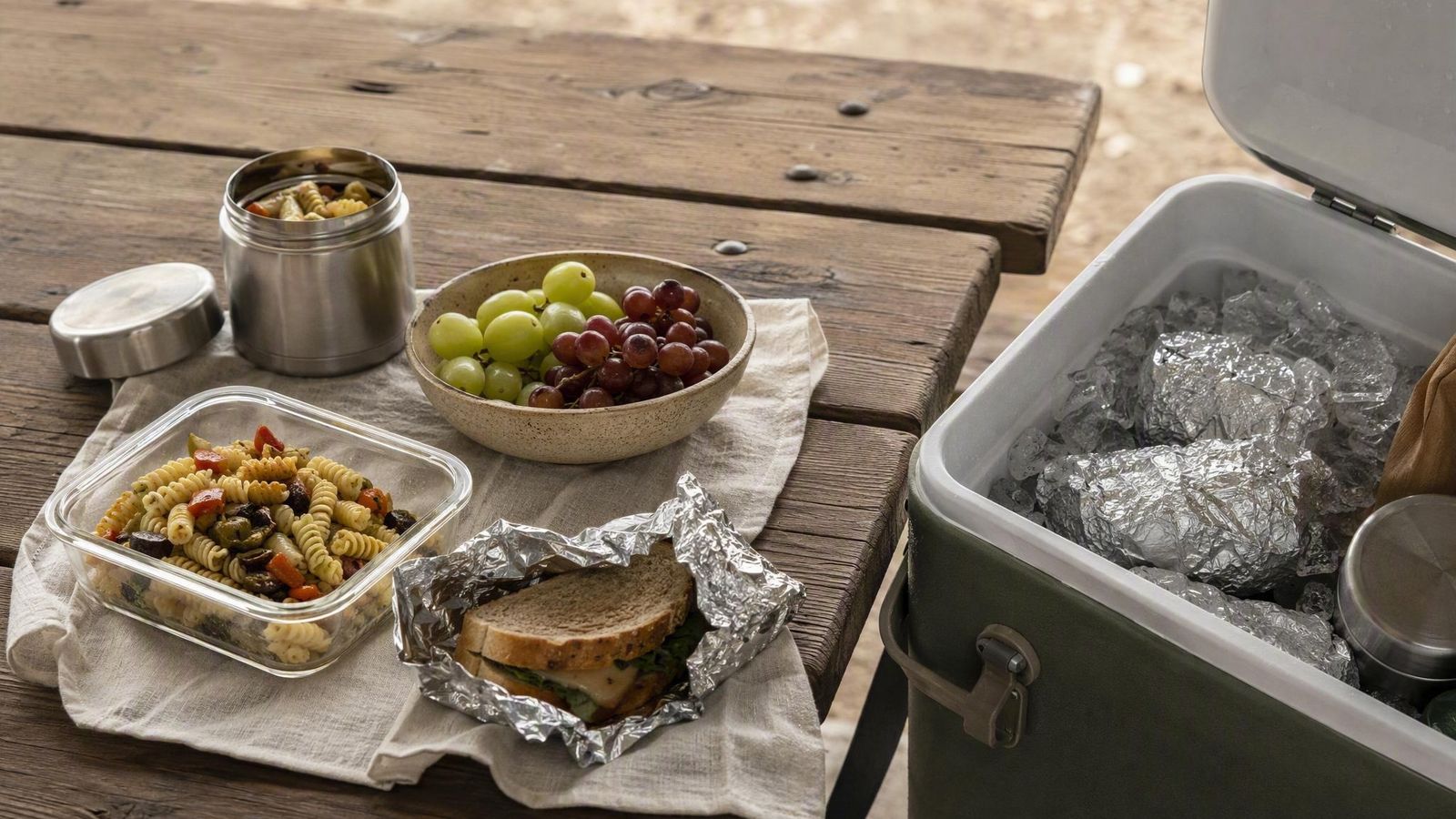
A road trip meal is not a bigger pile of snacks. A meal has a main, sits you down for twenty minutes, and resets the trip; snacks just hold the line between meals. This guide covers the three ways to eat real food on the road: make-ahead cold mains that ride the cooler, the USDA frozen-sandwich method for cooler-free days, and assembly bowls you finish at a rest stop. Grazing food lives in the separate road trip snacks guide.
The line between a meal and a snack
The difference matters because the logistics differ. Snacks are chosen for one-hand eating in a moving car; meals are chosen for a stopped car, a picnic table, or a tailgate, which frees you to pack things with forks, dressings, and components. It also means almost every real meal involves perishable food, so the cooler rules below are not optional reading. If you want food for the moving car, that is the road trip snacks guide; this page is for mealtimes.
Make-ahead cold mains that ride the cooler
These are complete meals cooked the night before, chilled hard in the refrigerator, and eaten cold from the cooler. Two USDA rules set up the cooler before any food goes in.
- Vinaigrette pasta salad with salami and mozzarella. Vinaigrette instead of a mayo-family dressing means nothing turns gluey when cold, and the flavors deepen overnight. Pack in individual lidded containers with forks taped on. Contains wheat and milk.
- Pressed picnic sandwich. A whole loaf layered with cured meats, cheese, and roasted peppers, wrapped tight and pressed under a skillet overnight. It slices into neat wedges at the stop and actually improves as it sits in the cooler. Contains wheat and milk.
- Grain and bean salad jars. Farro or rice with white beans, olives, cucumbers, and a lemony dressing, built in jars with the dressing at the bottom. Shake at the picnic table and eat from the jar. Naturally sturdy against sogginess.
- Cold roast chicken pieces. Roast thighs and drumsticks the night before, chill them completely, and pack them as hand-food with flatbread and a yogurt-free dip. Cold chicken at a scenic overlook beats any drive-thru. Keep it in the cooler until the moment of eating.
- Sesame noodle boxes. Noodles in a peanut-soy dressing are built to be eaten cool, with cucumber and shredded carrot packed on top. Contains peanuts, soy, and wheat; use a seed butter if the car is shared with nut-allergic passengers.
The no-cooler method: freeze the sandwiches
For a one-day drive without a cooler, USDA has a specific, slightly surprising answer: the sandwich itself becomes the ice.
In practice: build sandwiches on hearty sliced bread with fillings that freeze gracefully, wrap each one tightly, and freeze overnight. They thaw slowly in the bag through the morning and are ready around midday, still cold. The wet ingredients travel in a separate small container and go on at the picnic table, which also keeps the bread from going soggy. This is the single best trick for families who do not want to haul a cooler for a one-day drive.
Rest-stop assembly bowls
The third route splits the meal into components and assembles it at the stop: a dry base, a protein-family topping, crunchy extras, and dressing, each in its own container. Assembly takes five minutes on a tailgate and every component stays at its best. Grain bases and crunchy toppings ride the cabin tote; anything perishable, like cooked chicken, cheese, or cut vegetables, rides the cooler; shelf-stable pouches of tuna or chicken split the difference by needing no cold until opened.
| Meal family | Cold requirement | Assembly at the stop | Make-ahead window |
|---|---|---|---|
| Vinaigrette pasta or grain salads | Cooler until eaten | None, eat from the container | The night before |
| Pressed sandwich | Cooler until eaten | Slice into wedges | The night before, pressed overnight |
| Frozen sandwiches, USDA method above | No cooler; the sandwich thaws through the morning | Add lettuce, tomato, and condiments from a separate container | Frozen the night before or earlier |
| Assembly bowls | Only the perishable components ride the cooler | A few minutes of tailgate assembly | Components prepped the night before |
| Shelf-stable backup meal | None | Open and eat | Lives in the trunk all trip |
That last row deserves a word: always carry one boring, fully shelf-stable backup meal per person, like crackers, canned spread, jerky, and fruit. Traffic happens, and the backup meal is what keeps a delay from becoming a bad decision about warm leftovers.
What happens to the leftovers
The hardest moment of road trip eating is the end of lunch, when half a pasta salad is sitting on the table and the car is already warm. USDA gives a clean, unambiguous rule for it.
So the routine is: serve, eat, and put the containers straight back on the ice, not on the table for the rest of the stop. When the ice is gone, the perishable leftovers go with it, no matter how good they look. Portioning meals into per-person containers at home means less exposed food and fewer painful discards.
The night-before meal prep checklist
Meal prep the night before the drive
- Cook and fully chill every make-ahead main in the refrigerator overnight
- Freeze the cold sources, and freeze the sandwiches if you are running the no-cooler method
- Portion meals into per-person containers so leftovers barely exist
- Pack wet ingredients, dressings, and condiments in separate small containers
- Stage a shelf-stable backup meal per person in the trunk
- Load the cooler last, in reverse order, straight from the refrigerator
The cooler technique behind all of this, from ice choice to packing order, is the cooler packing guide. Arriving tonight? The hotel room meals guide picks up where the drive ends, and the meal prep hub covers the make-ahead craft in depth.
Sources
- USDA FSIS: Food Safety While Hiking, Camping & Boating · www.fsis.usda.gov (accessed 2026-08-31)