Camping meals with no cooking: the day-one rule and a 3-day menu
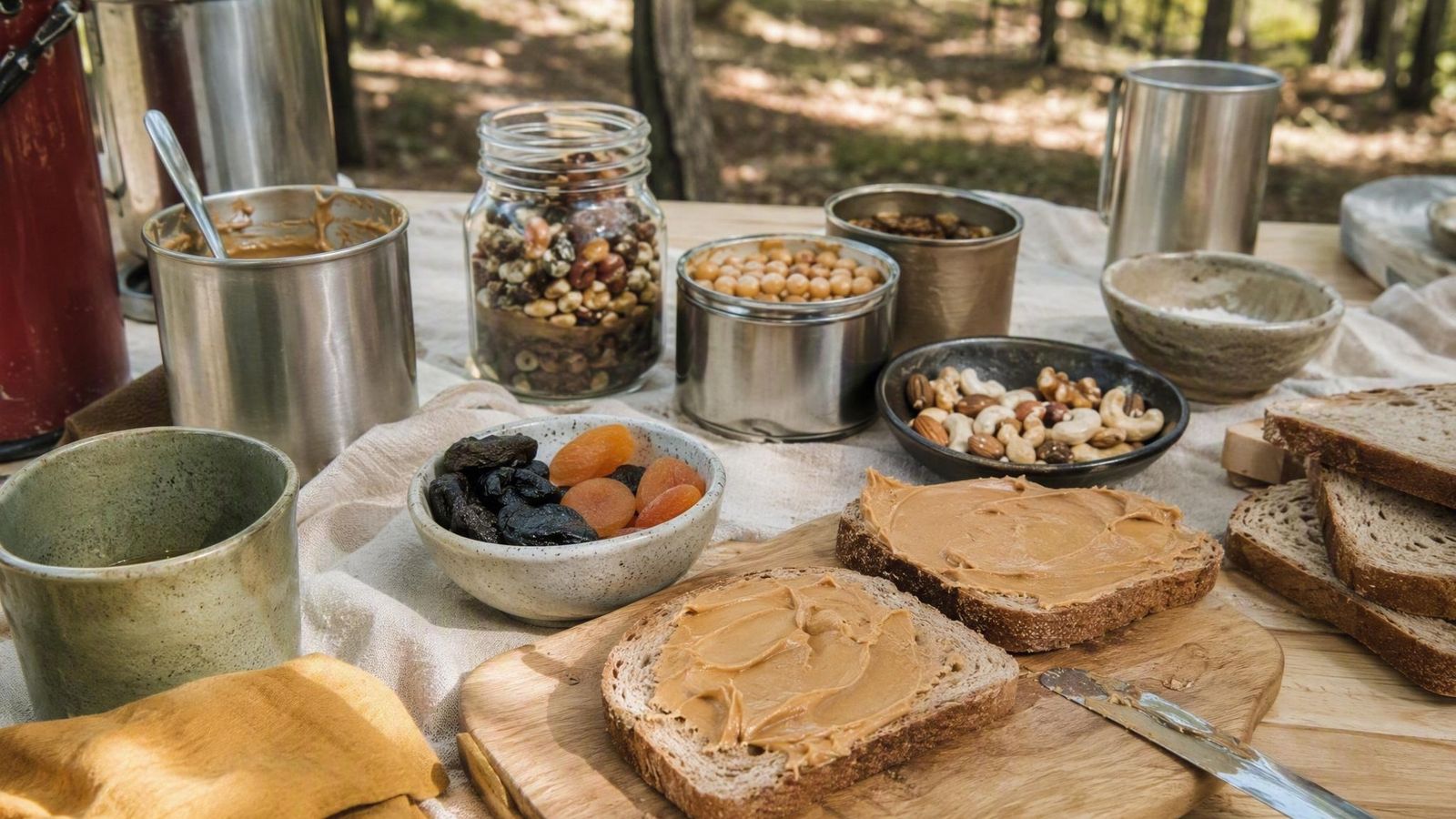
No-cook camping food runs on one split, straight from USDA's hiking and camping guidance: cold, perishable food belongs to the first day of the trip, and every day after that runs on shelf-stable food that never needed a cooler. That single rule organizes the packing list, the menu, and the weight in your pack. Below is the day-by-day plan built on it: the USDA list of foods that need no cooler at all, the frozen-sandwich trick that makes day one work, what changes if a cooler does come along, and a three-day menu with a pack-out checklist.
The day-one rule that organizes the whole trip
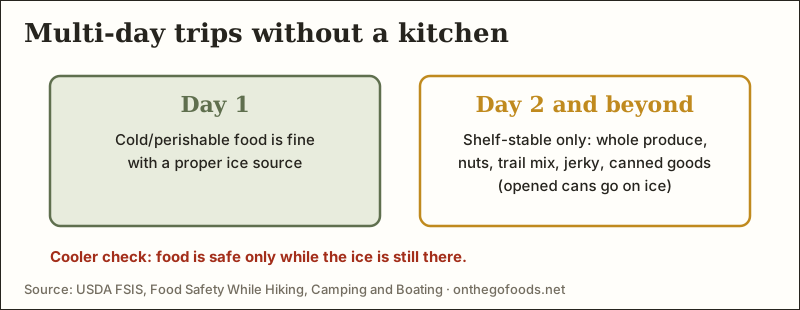
USDA writes this for backpackers, and it is the honest planning frame for any trip without reliable refrigeration: plan the menu backwards from it. Anything perishable, the deli sandwich, the pasta salad, the cheese, gets scheduled early while the cold you carried from home still holds; everything scheduled for later days must be genuinely shelf-stable. The failure mode this prevents is the optimistic one, where day-three lunch quietly depends on a bag of ice that melted on day one.
The foods that never needed a cooler
This short list carries the back half of the trip, and each entry rewards a little thought. Whole produce means whole: apples, oranges, and carrots ride for days in a pack, but cutting fruit turns it into perishable food, so slice at the meal, not at home. Jerky and nuts are the dense calories that make hiking lunches out of nothing. Canned tuna, chicken, and meat spreads are the shelf-stable mains, with the open-can rule attached: once opened, the can needs cold, so on a cooler-free trip an opened can gets finished at that meal. The same logic drives the smartest small tip in the USDA camping guidance: bring the smallest jar you need, because a big opened jar becomes both a food problem and pack-out weight. More shelf-stable ideas live in no-fridge snacks and no-fridge lunch ideas.
Day one: the frozen-sandwich trick
The frozen sandwich is its own cold source: it thaws through the morning and arrives at lunch cold and intact. Sturdy, coarse bread survives the freeze-thaw cycle; soft sandwich bread turns to paste. Keeping mayonnaise, lettuce, and tomato separate is not fussiness, it is what keeps the bread from going soggy and keeps the dressed, perishable version of the sandwich from existing until the moment you eat it. The jar-versus-salad logic behind that mayo call is covered in how long can mayo sit out.
If a cooler comes along
A cooler does not change the day-one architecture, it just widens the cold window and adds three USDA rules worth carrying in your head.
The ice-remaining rule is the campsite's referee: no reconstructing hours in the sun, just look in the box. Ice present, the cold food stays in play; ice gone, perishable leftovers get packed out as trash. The full packing method, layer by layer, is in how to pack a cooler.
A three-day no-cook menu
| Day | Breakfast | Lunch | Dinner |
|---|---|---|---|
| Day 1 (the cold window, per the day-one rule above) | Overnight oats eaten from the jar, fruit | Frozen-ahead sandwiches thawed by noon; mayo, lettuce, and tomato added at the table | Pasta or grain salad carried cold from home, eaten within the day-one window |
| Day 2 (shelf-stable) | Peanut butter on crackers, dried fruit | Tuna pouches on flatbread, whole carrots, jerky | Canned bean salad with olives, crackers, trail mix |
| Day 3 (shelf-stable) | Granola with shelf-stable milk boxes | Peanut butter and jelly on sturdy bread, an apple | Canned meat spread on crackers, nuts, dried mango |
The pattern generalizes past three days: day one spends the cold you brought, and every later day is a remix of the no-cooler list. Pouched fish and chicken deserve a special mention, they are single-serving cans without the can opener or the leftover problem.
Pack-out and safety checklist
Before the trailhead
- Every perishable item is scheduled for day one; nothing perishable is planned for later days
- Sandwiches are frozen ahead on sturdy bread, with mayo, lettuce, and tomato packed separately
- Jars and cans are the smallest size the trip needs, and pouches are chosen over big cans
- Every opened can has a plan: into the cooler if one came, otherwise finished at that meal
- Trash bags are packed; discarded food is carried out, never buried or left
- If a cooler comes: blocks frozen a day ahead, a shade spot planned, drinks in their own cooler
This page is the camping branch of the no-refrigeration hub. The room-temperature clock underneath every call here is explained in how long can food sit out.
Sources
- USDA FSIS: Food Safety While Hiking, Camping & Boating · www.fsis.usda.gov (accessed 2026-08-31)