Road trip snacks, graded for melt, mess, and one-hand eating
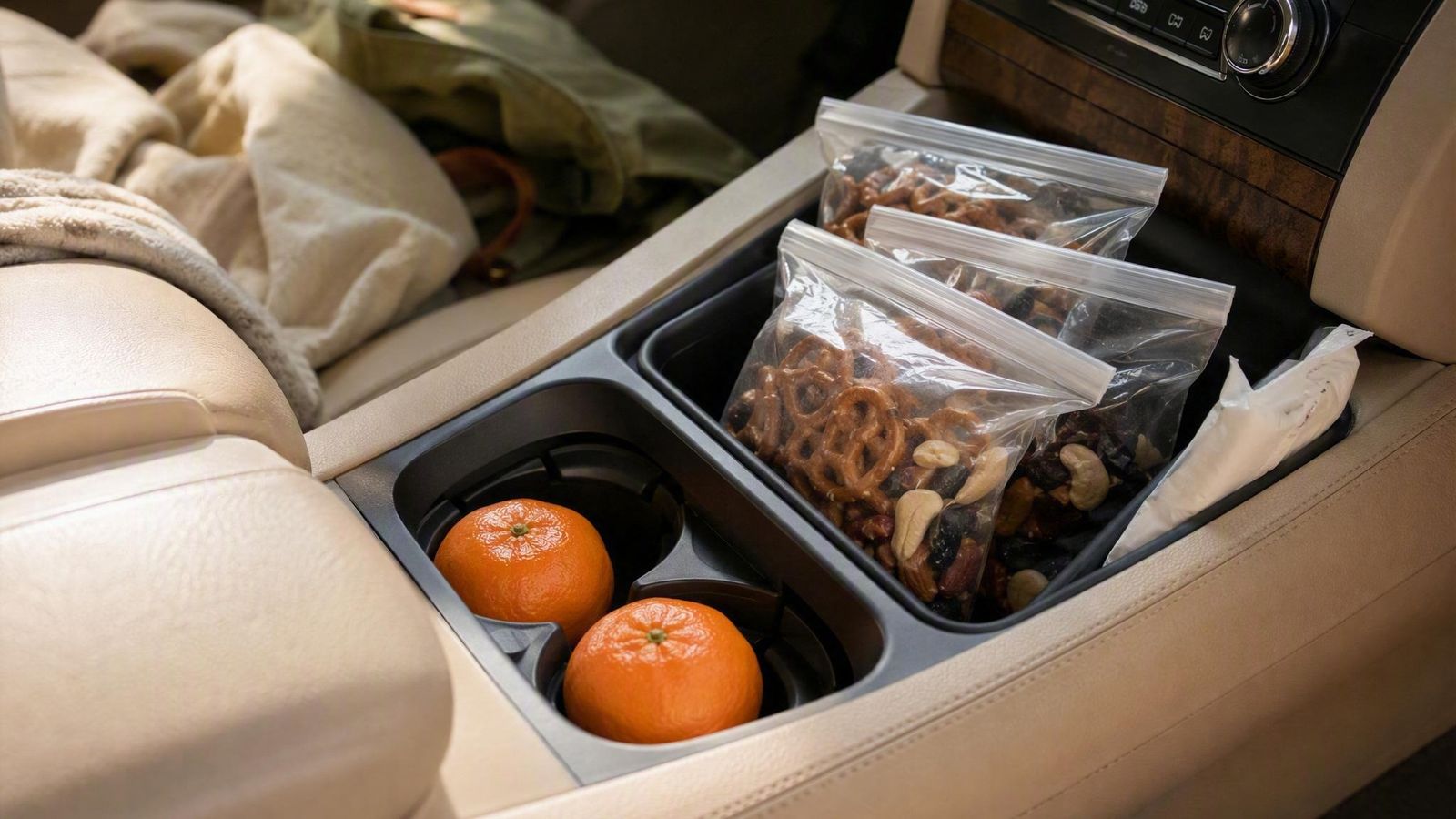
The right road trip snack depends on three things most snack lists ignore: whether it survives without a cooler, whether it survives a hot car, and whether it can be eaten with one hand at highway speed. Start with the foods USDA says never need ice, grade everything else for melt and crumbs, and give the driver a separate, stricter list. Here is the whole system.
Start with the list that never needs ice
Build the main snack bag from that list and you can park in the sun, stretch the drive, and skip the ice math. Here is how each earns its seat, plus a few pantry additions in the same spirit.
- Whole fresh fruit. Apples, clementines, and bananas travel in their own packaging. Whole is the key word: the moment fruit is cut, it becomes perishable and belongs in the cooler. Pack clementines for low mess, apples for the driver, bananas on top of the bag where they will not bruise.
- Nuts and trail mix. Dense, dry, and crumb-free, they ride in the console for the entire trip. Portion into small cups at home so nobody is fishing around a shared bag at the wheel. If children in other families will share the car, pick a mix made without nut products, check the label for cross-contact, and tell the parents exactly what is in it.
- Jerky. Shelf-stable, zero melt risk, almost zero mess. Keep an unopened bag as the emergency reserve and expect it to disappear first.
- Peanut butter and jelly. The classic travels because both spreads are shelf-stable. Make sandwiches on sturdy bread the night before, or pack crackers and a jar with a spreader for a rest-stop version. Contains peanuts and wheat; a seed-butter swap works for shared cars.
- Canned meat spreads and crackers. Cans need no cold at all while sealed, which makes them ideal for the trunk. The one rule: once a can is opened, it goes into the cooler, so open only what gets finished at that stop.
- Sturdy crackers and pretzels. Not on the USDA list because they never needed to be; they are baked dry goods. Choose thick pretzels and whole crackers over crumbly styles, and keep them in a hard container so they arrive as crackers, not dust.
- Dried fruit. Raisins, apricots, and mango strips fill the sweet slot without a melt problem. Sticky-adjacent, so pair with napkins and keep out of the driver rotation.
Melt and crumb: where a snack rides decides its fate
The same car has hot zones and cool zones: a glovebox or dashboard in direct sun bakes, while a shaded footwell stays much milder. This table is practical grading, not a safety claim; it is about whether the snack is still pleasant, not whether it is safe.
| Snack | Glovebox or sun-side seat | Shaded footwell | Mess level |
|---|---|---|---|
| Chocolate, chocolate-coated anything | Melts into a wrapper disaster | Holds up far longer | High once soft |
| Gummy and chewy candy | Fuses into one block | Stays separate | Low, but sticky fingers |
| Granola and cereal bars, uncoated | Softens but survives | Fine | Medium, crumbs |
| Plain nuts and trail mix without chocolate | Fine | Fine | Low |
| Crackers and pretzels | Fine, but crush easily anywhere | Fine in a hard container | High if loose, low if contained |
| Whole fruit | Bruises and warms, still edible | Fine | Low; peels need a trash bag |
| Cheese crackers with filling | Filling goes greasy in heat | Fine | Medium |
The short version: nothing chocolate rides in the sun, everything crushable rides in a hard container, and the shaded footwell is the best pantry shelf the car has.
One-hand, eyes-forward: the driver's list
The driver's rules are stricter, because eating cannot compete with driving. A driver snack must work with one hand, without looking down, without a wrapper struggle, and without a drip.
- Pre-portioned nuts or trail mix in an open cup that sits in the cup holder, so a handful requires no unwrapping.
- A whole apple. One hand, no packaging, self-contained core to drop in the trash bag.
- Pretzel rods or thick crackers from a wide-mouth container within reach, not a crinkly bag in the back.
- Jerky pieces pre-torn at home, because tearing jerky is a two-hand job.
- What stays off this list: anything with dip or sauce, string cheese that needs peeling, unwrappable bars, and every sticky candy. Those wait for passengers or the next stop.
Back-seat kids: pack for the seat, not the shelf
Kid snacks live or die on containment. Portion everything into small lidded cups before the trip, cut foods to appropriate sizes for each child, and favor snacks that fail gracefully: a dropped pretzel is a vacuum job, a dropped yogurt tube is an upholstery event. Treat the car like a school lunchroom on allergens, too: if a carpool friend rides along, ask their parent before packing peanut products, and keep a separate snack bag packed without nut products if there is any doubt, and check labels for cross-contact. Wet wipes and a per-seat trash bag close the loop.
When a snack is actually perishable
Cheese sticks, yogurt, deli roll-ups, hummus cups, hard-boiled eggs, and any cut fruit are perishable, full stop. They can absolutely come on the trip, but they ride in the cooler and their eating window is set by one federal rule.
Take perishable snacks out of the cooler at the moment of eating, not at the start of the leg, and put the extras straight back. The cooler setup that makes this painless is in the cooler packing guide.
The night-before snack bag checklist
Pack the snack bag tonight
- Shelf-stable snacks portioned into cups and hard containers, one tote for the cabin
- Chocolate and meltables assigned to the shaded footwell or left home for summer trips
- Driver cup filled with one-hand snacks and placed by the cup holder
- Kid portions cut to appropriate sizes, lidded, and matched to each seat
- Perishable snacks staged in the refrigerator to move to the cooler last
- Trash bags, napkins, and wipes distributed to door pockets
Snacks cover the gaps; actual mealtimes on the road deserve real food, and that is the road trip meals guide. For more shelf-stable ideas beyond the car, browse portable snacks and no-refrigeration snacks.
Sources
- USDA FSIS: Food Safety While Hiking, Camping & Boating · www.fsis.usda.gov (accessed 2026-08-31)
- USDA FSIS: Keeping 'Bag' Lunches Safe · www.fsis.usda.gov (accessed 2026-08-31)