Lunchbox ideas for picky eaters: swap the part they refuse
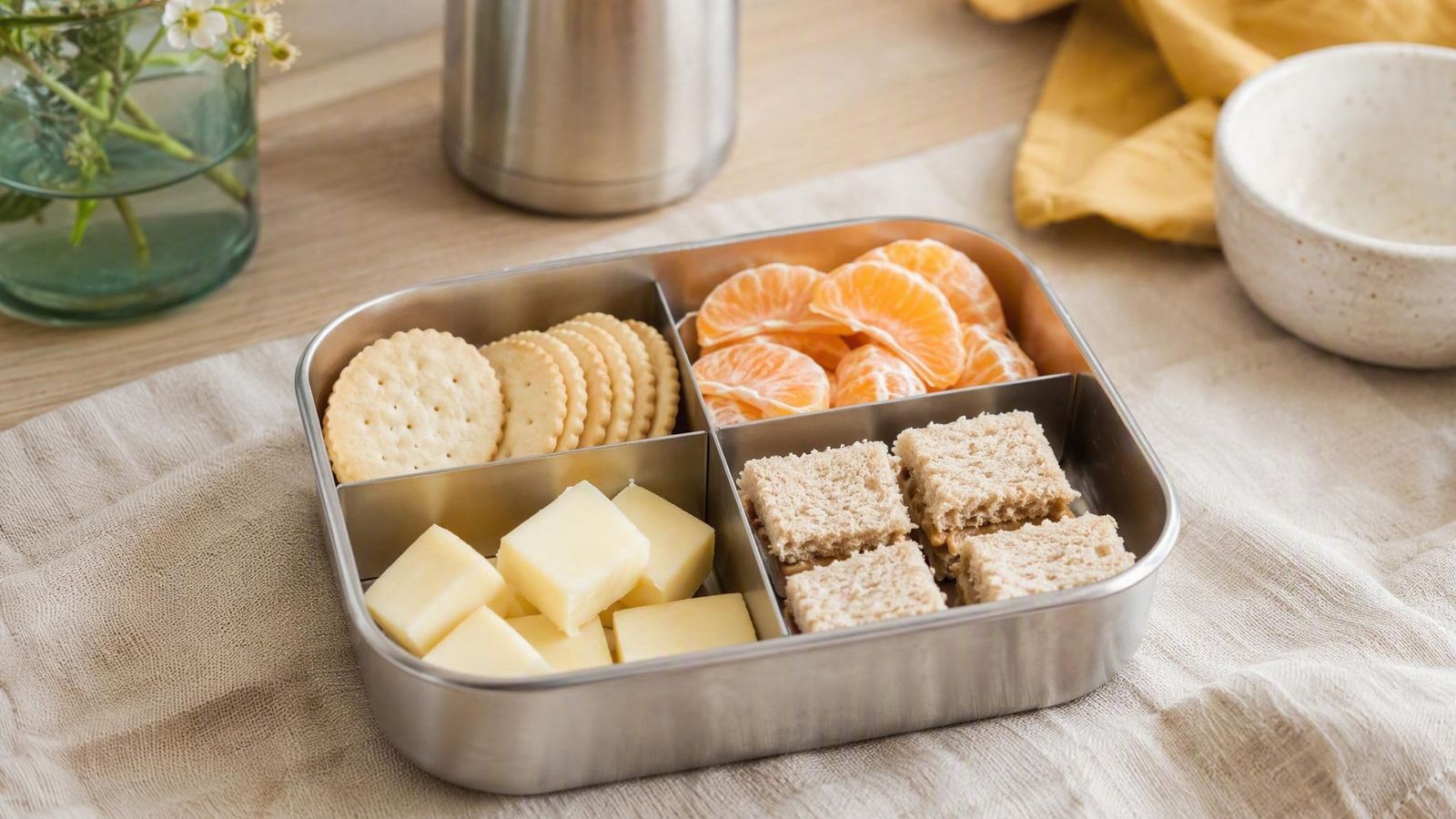
The fastest way to improve a picky eater's lunchbox is to stop replacing whole meals and start swapping the single component that gets refused. Most refusals target one thing: the bread got soggy, the foods touched, the vegetable looked wrong. Fix that one thing and keep the rest, and the box comes home lighter. Below is a swap matrix organized by what gets refused, the safe-food-plus-one method many parents use to introduce new foods without a standoff, and an honest section on what a lunchbox can and cannot change.
The swap matrix: match the fix to the refusal
Find the row that sounds like your kid. Each swap keeps the box familiar and changes only the failure point, which is usually texture, temperature, or presentation rather than the food itself.
| If your kid refuses | Try instead | Why it can work |
|---|---|---|
| Sandwiches | Deconstructed: crackers, cheese, and deli meat in separate compartments; or tortilla roll-ups sliced into pinwheels | The objection is often soggy bread and squashed layers, not the fillings; separating the parts removes the texture problem |
| Vegetables | Raw versions with a small dip cup (ranch-style or hummus), or one veg placed in the box without comment or pressure | Raw carrots and snap peas have a predictable crunch that cooked vegetables lose; the dip gives the kid control over each bite |
| Anything not beige | Work within beige first: pasta, rice, crackers, cheese, bananas, tortillas; vary the shape or brand before varying the color | Starting from accepted foods and changing one variable at a time keeps lunch eaten while the range slowly widens |
| Mixed or layered foods | Compartment boxes with nothing touching; sauces and dressings in their own sealed cups | For many kids the deal-breaker is contact between foods, not the foods; separation solves it outright |
| Cold meat | Meat-free mains: bean and cheese quesadilla wedges, a hummus and cracker box, or a hot pasta thermos | Cold deli meat has a texture some kids never accept; a hot main in a jar sidesteps the whole category |
| Whole fruit | Cut fruit in bite-size pieces: apple slices, halved grapes, clementine segments with the peel already off | Effort is a real barrier in a short lunch period; fruit that takes work loses to the crunch slot every time |
Cut food to sizes appropriate for your child and follow your pediatrician's guidance. The four-slot structure these swaps plug into lives in the school lunch ideas hub.
The safe-food-plus-one method
This is a common parent strategy, not a clinical program: fill the box with foods your kid reliably eats, then add one small portion of one new or borderline food. No announcement, no deal-making, no clean-plate rules. The safe foods guarantee the kid eats something at school, which takes the pressure off the new item entirely.
Two ground rules make it work. First, the new item stays small: two bites' worth, not a full serving, so throwing it away costs you nothing and the portion does not look like a demand. Second, repetition without commentary: the same new food can ride along many times before it gets tasted, and that is normal. If your child's overall eating worries you, that is a conversation for your pediatrician, not a lunchbox to engineer.
Honest expectations: what a lunchbox cannot do
No container, cutter, or clever bento layout makes a kid eat. The realistic goals are calmer mornings, a box that comes home mostly empty, and a slowly widening list of accepted foods. Judge the week, not the day: one refused lunch means nothing, and a kid who ate well at breakfast may simply not be hungry at noon. Skip the comparison game with photogenic lunchboxes online; the box that gets eaten beats the box that gets photographed.
Keeping it cold: the part picky eating does not change
Cheese, deli meat, yogurt, dips, and cut fruit are perishable no matter how the box is arranged, so the cold-pack rule applies to every swap above.
The full cold-chain setup, including what changes when a classroom fridge exists, is in packed lunch food safety. If the winning swap turns out to be a hot main, the jar routine is covered in thermos lunch ideas for kids.
The packing routine that keeps swaps consistent
Night-before routine for a picky eater's box
- Pick tomorrow's box from the swap matrix row that matches this week's refusals
- Portion the safe foods first; they are the guarantee that something gets eaten
- Add one small new item, unannounced, in its own compartment
- Keep every component separated; sauces and dips in sealed cups
- Put both cold sources in the freezer and stage the insulated bag
- Note what came home today; three straight refusals means change the swap, not the kid
Keep a simple written list of accepted foods and add to it as items graduate from the plus-one slot. Over a semester the list grows, and the swap matrix gets easier to fill from it.
Sources
- USDA FSIS: Keeping 'Bag' Lunches Safe · www.fsis.usda.gov (accessed 2026-08-31)